[FEATURE_IMAGE_INSERT]
All animal lovers unite! Have a look at the most adorable, best pet memes of all time!









































Make sure you check out my in-depth article on the best vacuum for pet hair and bagless vacuum reviews

[FEATURE_IMAGE_INSERT]
All animal lovers unite! Have a look at the most adorable, best pet memes of all time!
Make sure you check out my in-depth article on the best vacuum for pet hair and bagless vacuum reviews

[FEATURE_IMAGE_INSERT]
If you love dogs just as much as I do then these best dog memes are perfect for you…























I hope the best dog memes made your day a whole lot better!
Make sure you check out my in-depth article on best vacuum for dog hair.
See the best vacuum cleaner for hardwood floors and shark vacuum bagless.

[FEATURE_IMAGE_INSERT]
































I hope the best cat memes brightened your day!
Make sure you check out my in-depth article on the best vacuum for pet hair and best vacuum for pet hair and hardwood floors and carpet
Interested in learning more? Take a look at some of our most popular articles!

[FEATURE_IMAGE_INSERT]
As most of us know from surviving in this cruel world with pet allergies when I come into contact with a pet or have family members who are allergic.
It’s possible to enjoy life and have a ‘YOLO’ time with your furry companions despite the allergic reactions, but how do you combat pet allergies?
But where to start?
Not that it’ll be entirely comfortable, mind you; it’s more of a doable situation to combat pet allergies in most cases.
So, how can you manage this?
Well, there are few guidelines you need to observe to ensure that you live life to the fullest with your loving and loyal cats.
Most importantly:
Stop Worrying and Start Living with These Straightforward and Practical Tips on How to Manage Your Cat Allergies
Let’s say you never had allergies before and then, all of a sudden, you start sneezing and hiving after getting that lovable cat from your dear friend. How do you deal with that?
Here are 7 ways:
It is weird, right?
Imagine taking a cat that is known to be cleaner than any other animals due to its licking behavior, and putting him/her in a tub and cleaning them.
Well, fear not.
It isn’t entirely weird.
Routinely bathing your pets (weekly, if possible), helps you to get rid of the allergens that come with them.
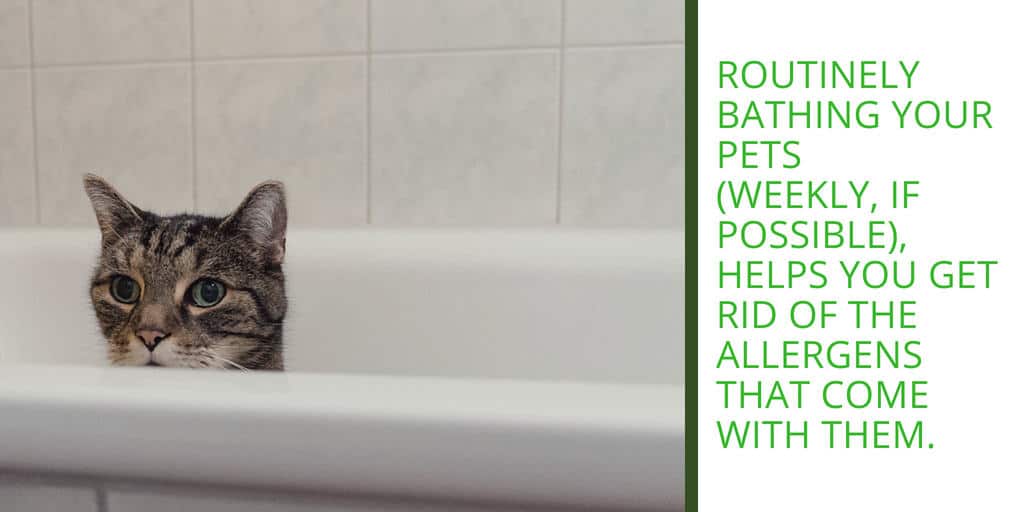
Nothing trumps down the ugly allergens1 that live in their fur than a proper cleansing.
Therefore…
With the right shower gels and veterinarian-recommended soaps, cleaning your cat will allow you to strip the allergens off the surface and wash them down the drain.
You can also seek the services of moistened cloths.
Brushing removes the undercoat (which can trap the allergens). It helps you lift and remove the offending molecules effectively.
So, consider a twice weekly brushing inbetween bathing, then followed by moistened cloth “bathing.”
Always make sure that your cat’s hair is at a manageable length can help.
Cats with long hair, or those that can no longer groom themselves adequately, are the ones that need regular professional clipping.
A cat with a skin disease or self-grooming difficulties is more likely to wreak allergic havoc on allergic household members.
But let me tell you this:
To avoid such a situation, take the cat to your local vet, and you can get the best advice on how to deal with such an issue.
Addressing these matters with your vet’s assistance can be transformative for the cat and also for pet allergic humans.2
Filters break down often and thus making sure that you change them every two weeks or so will help you in reducing the amount of dander in the house to manageable levels.
For effective routine cleaning, investing in a pet-hair vacuum for pet hair can be a godsend. These specialised vacuums are designed to tackle stubborn pet hair, making your home more comfortable and reducing allergens in the air.
Most vacuum cleaners for pet hair are hassle-free, providing a perfect solution for maintaining a healthier atmosphere for you and your family. However, cleaning alone isn’t always enough to address allergy symptoms.
An air purifier for allergy relief can also be a big help, offering advanced filtration to trap allergens like pollen, dust mites, and pet dander. But you might wonder, is it worth buying an air purifier to help control allergies?
Many experts agree that the right air purifier can significantly ease allergy reactions, creating a fresher and cleaner indoor environment.
By combining regular vacuuming with a high-quality air purifier, you can make your home a haven from allergens and improve the overall air quality for you and your loved ones.
Love thyself and be kind to yourself and others by seeking professional help for any pet allergies.
The allergist will recommend some drugs that will help tone down the reactions, and you might also get to know the exact trigger to your allergies.
Simply put…
You might be surprised to find out your cat is not the issue, but the pollen3 and dust they drag into your house could be the problem.
Check the best cat memes ever and the History of Vacuum Cleaners.
Therefore, MAKE SURE you visit the doctor ASAP!
[CUSTOM_FAQ]
You don’t have to worry about allergies anymore if you follow these steps to combat pet allergies. Your sneezing, eye-watering days are over!
Read our vacs for allergies reviews to find the right tool to combat pet allergies.

[FEATURE_IMAGE_INSERT]
Your in-laws and friends are about to visit you, but your home reeks of smoke, and you’re wondering how to go about cleaning cigarette smoke and getting rid of the odor completely.
You’ve probably tried opening the windows and doors, using all the detergents in your home, essential oils, or plants like mint, but nothing is working.
But where to start?
Well, don’t give up yet.
There are very few odours as permeating or hard to get rid of as cigarette smoke.
The stink is resilient, and it’s usually resistant to more straightforward tactics like opening windows to let in the fresh air.
Let me tell you this:
To get rid of the cigarette smoke odour completely, particularly in a room where you often smoke in.
You’ll need to clean your carpets, walls, and any other porous surfaces rigorously and thoroughly.
Let’s start with the basics.
If you don’t smoke often, then you can eliminate the odour with one or two thorough cleanings.
If you smoke frequently, however, you’ll have to clean all your walls and floors thoroughly and unsparingly to help ward off the cigarette odours.


When it comes to smoke smells, cleaning your entire home is an essential aspect to take into consideration.
Many people tend to focus mostly on the walls of their homes, thinking that it’ll be enough to get rid of the nasty smell.
However, it’s imperative to ensure that you thoroughly clean both the walls and the ceilings, as well as the carpet or hardwood floors.
To help you on that…
Here is a step by step process of how to ensure your home is thoroughly cleaned:
Make sure that you use cleaning essentials that contain ammonia and glycol. These are both critical ingredients for neutralising the odour.
You have to ensure that you’re careful when dealing with these toxic chemicals.
If you have any pets or kids, make sure that you keep them out of the room when you’re making the ammonia1 and glycol-based solution.2
An important thing…
You should also ensure that you put on gloves and any other safety clothing to help prevent any accidents.
For the best results and to avoid destroying your house, make sure that you test an area of the walls and ceiling first to see how the paint will react to the cleanser.
If nothing happens, then you can continue cleaning your home.
After you’ve thoroughly cleaned the walls and ceiling, you should let the surfaces dry and then smell the walls to see if you’ve rid them of the cigarette smoke.
If you don’t smell it, make sure that you keep checking after a day or two as the smell of the cleaner could be masking the smoke.
Carpets retain a lot of the smell of cigarette smoke.
To clean them rigorously, you need to use a reliable rug cleaner and apply the cleaning product generously around your home and ensure you also get into all of the corners and edges.
You might try the Electrolux Canister Vacuum.
Here’s a tip:
Follow the guidelines; leave the cleaning detergent on for the maximum time allocated.
Later on, vacuum the carpet thoroughly, let it dry completely, then do a smell test.
If you can still smell the smoke odour in the carpet, then you might need to hire cleaning professionals for deep cleaning.
If you have hardwood floors, and doors, ensure that you use a cleaner that is wood-friendly. Mop the floor meticulously, and change the mop water regularly.
If there’s no other option, you may need to hand-scrub the corners and floor edges for better cleaning.
You should also remember to clean the baseboards and door frames since smoke tends to stick everywhere.
Take off all the drapes and blinds in your home.
If the curtains are hard to clean, then you might need to go to the dry cleaners.
Remember to inform the dry cleaner about getting rid of the cigarette smoke.
On the other hand…
If you can, wash them, make sure that you wash them in warm water.
Also, add some vinegar to the water since vinegar is a perfect odour neutraliser and a natural cleaner.
Make sure that you use one cup of the vinegar per full load but ensure that you add the vinegar to your warm water before you put the drapes into your washer.
Vinegar might be a great odour neutraliser, but it’s also a natural bleach, and it’ll fade the colors, so you shouldn’t let fabrics sit for a long time in vinegar and water.
In my own experience:
To clean your blinds, be sure to place them in the bathtub. Fill the tub with hot water and then add a cup of vinegar.
Let them soak in the tub for 15 to 20 minutes and then scrub them using a fine scrub brush.
After cleaning them thoroughly, hang them to dry.
However, if you’re using other types of material (different than wood or fabric), make sure that you follow the specific guidelines.

Even after thoroughly cleaning your walls, floors, drapes, and carpets, cigarette smoke might still linger in your home.
If you’re in such a setting, then the following tips might help you get rid of the odour permanently. Some of these tips include:
Fresh air is your best option in the fight against stale odours and cigarette smoke.
Ensure that you open windows and doors often to get as much fresh air into your house.
While this won’t rid of the smell completely, it’ll help to improve your air conditions while you attack the sources of the smoke.
The best way to air out your home is by using the cross-ventilation.3
If it’s possible, put your box fans or window fans in one or more windows so that they can blow out.
You can then opt to open doors or windows on the opposite side of your home or in other rooms to let in the fresh air, replacing the stale indoor air.
If the smell still lingers, then you need to consider getting an air purifier.
Investing in a safe air purifier is an incredible way to help decrease the smoke smell.
It will take time for your home to be completely rid of the smoke, so it’s best to keep your air purifier in the room you use the most.
During the day, that might be your kitchen or home office. At night, the bedroom.
That’s true…
Purifying your air by using the air purifying system is also essential for any family member who is allergic to cigarette smoke.
If you can still smell the smoke with time, then you need to consider repainting your walls and ceilings.
You can try talking to your local paint store about your problem with proper advice.
They can help you find a sealant that you can apply to your walls and ceilings before you start repainting the.
The sealant will help seal off the cigarette odour and prevent it from seeping through your new paint job.
[CUSTOM_FAQ]
There’s nothing as embarrassing as hosting guests with a pungent smell lingering in your home.
To clean cigarette smoke, ensure that you invest in the right products and a perfect air purifier for a successful hosting experience.
Take a look at our reviews on air purifiers!

[FEATURE_IMAGE_INSERT]
Are you curious to find out what are the best indoor plants for clean air?
How indoor plants can purify the air is the hype this season, especially after the global pandemic that hit more than 80 countries around the world.
However…
Despite the need for these incredible machines, with the world economy sleepwalking into a new financial crisis and no one is being spared the brunt of the debacle.
More than 40% of consumers are looking to invest in cheaper ways to ensure that their environment is purified.
Want to know more?
Luckily, NASA, through the Clean Air Study¹, has proven that there are several plants that you can use today to help detoxify your home from the airborne toxins, dust, and germs that you can find in household materials, products, and furniture.
So, one might ask, which are some of these plants? Well, you’ll learn about all this and more.
But where to start?

You don’t need the hard sell when it comes to house plants: They add some vibrant color to your home and a breath of fresh air to your space, no matter the size of the plant.
Well, as it turns out, these leafy plants also breathe a little life into you.
Isn’t that incredible?
That said, here are the ten most effective plants when it comes to dealing with air contaminants2.
Therefore, if you want to breathe comfortably and you don’t want to worry that your brown thumb will come to light, try giving these air-cleaning plants a try.

The Hemigraphis alternata, the purple waffle plant, is very useful when it comes to dealing with volatile organic compounds (VOCs³ ) like benzene, toluene, and octane, which come from everyday household items like hair spray, paint, cleaners, and even dry-cleaned clothes.
The purple waffle plant has deeply puckered foliage, which provides it with an extra-large leaf surface area that makes it excellent for cleaning the air in your living room and other large-sized rooms.
That said…
It’s also one of the most beautiful plants since the reverse side of its leaves is purple, which contrasts handsomely with the deep green leaves, thus giving your home that extra pop of color.
To get the most out of this plant, be sure to keep the waffle moist and place it in a brightly lit room to maintain the vibrant purple color.

Hedera Helix, the graceful ground cover and easy-growing perennial vine, is effective at reducing airborne fecal particulates, which makes it the best air purification agent for your en suite.
It also tolerates most light and soil conditions, but its ability to get rid of VOCs from the air in your home makes this houseplant extra special.
No wonder…
Horticulturists³ have even gone ahead to exploit the robust nature of this incredible plant by developing various fancy cultivars.
Some of these cultivars include ‘Fluffy Ruffles’ with ruffled leaves and ‘Gold Baby’ with golden variegation.
So, to take advantage of the plant’s beauty, scientists and interior designers recommend you grow 2 assortments in a large hanging basket for stunning contrast and twice the air purifying properties.
To add to that:
You should also remember to give your English ivy generous watering and at least five hours of direct sunlight every day, and it will, in turn, reward you with clean, detoxified air.

Brighten up your balcony, kitchen, or living room with the forgiving and perfect-looking Hoya Carnosa.
The wax plant helps in filtering out toxins like ammonia and benzene, which you can often find in plastics, detergents, and glue. It tolerates lower light levels, but its flowering is most prolific in high light conditions.
No wonder…
According to several home design experts, the trailing stems of wax plants are eye-catching in hanging baskets or, if you use them in conjunction with plant stands⁴.
To get the best service from this plant, be sure to place it in a spot near a sunbathed window since it’s drought-tolerant and prefers life on the dry side to avert root rot.

With this plant in play, you’re in for the best home experience and some great night’s sleep.
The yellow-tipped succulent is one of the best air-cleansing plants since it’s a low-maintenance plant, and it releases oxygen at night, thus helping you breathe better.
It’s also one of the best plants for filtering the air of formaldehyde, xylene, benzene, toluene, and trichloroethylene.
Now…
For the best outcome, place the snake plant near a window for proper sunbathing, but be wary not to over-water it, as its roots are prone to rot in moist soil.

The leaves of Asparagus Densiflorus are incredible for adding texture to mixed houseplant pots.
Want to know more?
Its delicate leaves on the upright stems contrast beautifully with trailing plants that love the same high moisture and low-light environments of the fern.
What makes it a great air-purifying agent is that it’s one of the few plants that help in reducing the levels of ammonia that you can find in a range of cleaning products.
For the best outcome, be sure to try asparagus fern with ivy, coleus, or philodendron plants in any room, and you will enjoy the air-purifying properties of this low-budget and low-care houseplant.

If you’re a houseplant newbie, the resilient purple spiderwort, Tradescantia pallida, is a perfect choice.
The beautiful plant, also known as the wandering Jew or the Purple Heart, is incredible for both indoors and outdoors.
It quietly battles toxins like carbon monoxide and xylene, giving you fresh and clean air all day long.
Think about it:
Even though the purple spiderwort is an annual and a tropical houseplant, it can effortlessly survive temperatures down to 25 degrees and is a thriving plant for colder rooms in the house.
To get the most out of this plant, you can try to repot the tiny Spiderworts and grow a whole family of plants that’ll take care of themselves… and you.

The healing and beauty regiment is a lovely addition to your windowsill, as it loves a sunny spot.
While being on hand to soothe your kitchen burns and deal with the unwanted scars.
This succulent is incredible when it comes to ridding the air of formaldehyde and benzene, found in varnishes, floor finishes, and detergents.

The Fittonia Argyroneura doesn’t produce any noticeable flowers, but its vibrant pink, red, or white veining of its leaves contributes to the ornamental value of this houseplant.
It’s true…
Unlike most houseplants, the nerve plant doesn’t require a bright spot to thrive, but consistent moisture is vital for its health. Check this article about Holmes air purifiers.
With more than 10 varieties in cultivation, you can choose to grow a grouping of several colors to achieve maximum air-purifying results from the nerve plant.

The Ficus Benjamina, or weeping fig, is a beautiful plant to grow as a small indoor tree as long as you provide the perfect environment to prevent it from shedding leaves.
The Weeping Fig loves bright light and consistent moisture but hates soggy water dumps.
It also doesn’t fair well near air registers, where dry conditions and temperature changes can stress the plants.
To add to that:
Unlike other household plants, the Weeping Fig needs a bit more love, and thus you have to pamper it with a shovelful of compost, as you would an outdoor garden plant.
Also, for it to be your trusted purifier for years to come, you should remember to place it in a bright spot, the humid area of your house, like the kitchen or lavatory, and let its leaves work their air-scrubbing magic.

The Dracaena or Dragon Tree is another household plant that’s perfect for a beginner.
It’s a slow-growing plant and requires bright indirect light. Since it’s also drought-tolerant, it can go for an extended period with no water.
Nonetheless…
The plant can be sensitive to fluoride⁵ that you can generally find in tap water. So be sure to use distilled water if you notice the leaves are getting discolored.
The average household humidity should be excellent unless you have an arid-like atmosphere.
If you want it to grow to its potential height of about 8ft, you also need to remember to place it in a room with high ceilings and reasonable sunlight. Read about air purifiers for commercial use.
Want to know more?
According to home design experts, Dracaena is one of the best plants when it comes to getting rid of trichloroethylene, xylene, and formaldehyde from your home’s air⁶. It also gives your home the splash of color it needs with its bright red trim.
You don’t always have to break the bank when it comes to dealing with air pollutants.
By getting yourself a stress-free and reliable houseplant, you can kick out all the allergens and toxins invading your home daily. Discover how to select the right room air purifier.
Simply put…
Try some of the mentioned plants, and you’ll be sure to enjoy your stay at home while reducing your hospital bills due to constant cases of flu and irritating allergies.
[CUSTOM_FAQ]
Cleaning your air can also happen without using electricity, like with the Best Indoor Plants for Clean Air. But if you are looking for an air purifier, read our reviews!
You can add a lovely plant to your home and get clean fresh air all day, every day.
Isn’t it wonderful?
And there are so many magnificent indoor plants for clean air to choose from, so you’re sure to be happy with your pick.
See how to remove dust from air.

[FEATURE_IMAGE_INSERT]
Is your garage attached to your home, and do you often leave the door open?
Have you been having any difficulty breathing lately?
Well, according to a health study, garages are a hub of toxic substances.
But where to start?
When these toxins find their way into your living space, they can have adverse effects on your health, thus the breathing problems. But, how can you stop garage fumes?

There are several ways your indoor air can be polluted.
From pollen finding its way into your home, pets dragging their air and dander, to your carpets, toxic fumes and gases from your attached garage finding their way into your living space.
Vehicles, paints, mowers, and lubricants have or generate toxic elements that can quickly enter your home through your doors, ducts, gaps around closed doors, and other wall and ceiling penetrations.
Here’s even more:
According to a Health Canada study, measurable quantities of benzene (a gasoline-related contaminant) find their way into most homes with attached garages.
In contrast, those without garages don’t necessarily have any.
Other studies from Minnesota, Iowa, Colorado, and Alaska have also found significant evidence of garage-generated carbon monoxide1 leaking into your home and activating carbon monoxide detectors.
Luckily…
There are some essential steps you can take to keep your indoor air quality secure.
The first thing you need to do is ensure that your garage is clean at all times.
So make sure that you avoid running your car, motorcycle, lawnmower, or any other gasoline-powered machine any longer than you need to when you’re in your garage.
Moreover, don’t start your vehicle or any other internal combustion engine2 when the garage door is shut.
When you do decide to start up your engine, after you open up your garage, move it outside as soon as possible then close it to avert any exhaust gases from floating back into your garage.
Make sure that you also turn your car off as quickly as possible when you pull it into your garage and leave its door open for a few minutes to clear the air.
When it’s possible, ensure that you avoid placing any mechanical systems like your gas-powered water heaters and furnaces in the garage.
In case you might be asking yourself,
Purchasing a versatile air purifier can also be a big help.
Fumes3 and other toxic gages can find their way into your home through gaps. It’s easy to take action to prevent, but most people tend to ignore these gaps.
So, ensure that you assess where there may be gaps from your garage into your home and use cheaper supplies like weather-stripping, caulk, and spray some foam to help solve these issues.
Moreover…
Make sure that the door leading to your house from the garage is shut tightly and that you apply proper weather-stripping.
If the weather-stripping is worn, ensure that you replace it immediately.
It would be best if also remembered to seal all the gaps like ducts and wiring that lead into your home or ceiling above your garage.
Now:
You can try using caulk or spare since they’re great products for sealing these types of penetrations.

Almost 30% of new homes in the U.S have garages left with open walls or with drywall attached, but the joints aren’t finished.
Both circumstances allow garage pollutants to find their way easily inside your home and affect your respiratory systems.
So, to avoid these calamities:
Ensure that your garage walls and ceilings are completely covered with drywall and have the joints adequately sealed with tape and compound to prevent fumes from getting into your home.
You should also ensure that the surfaces are primed and painted since paint and primers are less likely to leak.
While this will be a massive project and cost you a couple of bucks.
It’ll pay off in not only safeguarding your indoor air but also ensuring that your garage is more attractive and adds some value to your home design.
After a day of shopping for groceries, you might find your arms full when entering your house, forgetting to shut the garage door.
Alternatively, your kids could be playing and they forgot to shut the door or failed to close it all the way.
As much as you might be doing this unconsciously, leaving the door open if for a little while, allows nasty fumes from your garage to enter your haven of peace and comfort quickly and easily.
Best of all…
If you can, ensure that you set a rule that everyone must shut the door behind or trying installing a self-closing door for a more secure and reliable approach.
Another essential consideration to take is ensuring that all chemicals are stored securely and that they’re sealed.
Don’t let cans of paint thinners, solvents, and other toxic liquids to sit uncovered.
If you smell the chemicals then that means that potentially harmful fumes are in the garage area and they can find their way to your living space.
Here is my advice:
When you’re storing these containers, consider also getting a plastic bin with a sealable lid or an ice chest to help keep them safe.
The sealable top will act as an additional layer of protection, thus preventing your kids from accessing them and any accidental spillages.
Now…
If your garage serves as your storage locker, be sure to buy a lockable chemical storage cabinet to help keep the kids and pets out of reach.

If you’re a workaholic and you spend most of your time in the garage working with chemicals, paints, wood furnish, combustion engines, or other toxic and harmful materials.
Consider installing an exhaust fan that averts the odours and fumes to the outdoors.
You can try getting a decent bathroom or kitchen fan, or if you work in a larger space, a reliable air purifier would be the perfect fit like the air purifier for dust.
You should also install a carbon monoxide detector.
If you’re curious about the carbon monoxide levels in your garage, make sure that you mount one out there, too, at least temporarily.
Here is why:
It can be essential to you and your health to make sure it works properly.
If it, perhaps, goes off when you haven’t been running your motorcycle in the garage, it could be a sign of a hazardous condition with your furnace or gas water heater.
Even though it can be irritating due to the noise it emits, it might be the knight and shining armour you need to keep you safe.
If you’re building a new house for you and your family, consider making the garage fully detached from your home.
You’ll keep the odours, fumes, noise, and fire hazards out of your principal residence.
It’s true…
Getting rid of garage pollution is very crucial, especially if you live in an old home.
It might seem trivial, but the number of fumes that come from the garage can cause adverse effects to your respiratory system, thus leading to irreversible health conditions.
So always ensure that you monitor your CO levels and invest in an excellent air purifier to help curb these issues.
Read about how to buy an air purifier.
[CUSTOM_FAQ]
Even though having a garage is great and comfortable, it can also cause you harm if you’re not careful.
That’s why it’s so useful to get an air purifier for your garage specifically to stop garage fumes and protect your health and your family’s.
Read our reviews on air purifiers to learn more!

[FEATURE_IMAGE_INSERT]
Many people don’t realize that they are breathing and living in a polluted environment.
When I spend time indoors, I take in the air of the space around us, containing harmful pollutants such as carbon monoxide, formaldehyde, volatile organic compounds (VOCs), radon gas, and asbestos fibres. Many people are unaware of the indoor air pollution sources in their spaces.
Some of these pollutants come from my homes or offices, while others may be present because of commercial products like paints and carpeting.
Luckily there are ways to purify your indoor air so you can breathe easier! And there are a lot of reviews on air purifiers you can read.
But where to start?
This article will detail eight indoor air pollution sources and eight solutions to get rid of them!
Install a carbon monoxide detector. Carbon monoxide detectors can be found in most hardware stores and are relatively inexpensive.
Just follow the instructions on installing your device!
It will go off if there is an unsafe level of CO present or when you use gas appliances like cooking stoves, fireplace, furnaces, water heaters etc.
If your detector goes off, call 911 immediately as this could be life-threatening!
You can buy products that cleaners claim remove VOCs1 from carpets and upholstery, but how effective these are is debatable.
If you have a cat or dog, try washing your pets frequently.
Try vacuuming the floors every day and reduce the number of chemical cleaners in your home as much as possible.
When cooking or showering, open windows will let out some formaldehyde from new kitchen cabinets, flooring, etc.
Make sure that you use an exhaust fan if using gas appliances like ovens/ stoves and dryers because these release high levels of formaldehyde into the atmosphere (this is why I don’t want my stove on for too long).
The best solution, though, would be to install ventilation fans in your kitchen and bathroom so that the formaldehyde doesn’t build up while you use those areas and never gets a chance to enter your lungs.
If you live near a septic system, have cracks or gaps in foundation walls, or suspect your home has high radon levels.
This would be a good time for testing with an inexpensive do-it-yourself test.
It’s easy and takes only minutes – if tests results come back positive, consult experts as soon as possible because there is no cure for radon poisoning.
Keep your pet out of the living areas as much as possible- they can carry allergens2 that trigger asthma attacks or other respiratory problems for people with sensitivities.
If you do have pets around, incorporate them into your daily routine by giving them regular baths and brushing their fur regularly.
This will help eliminate odours from shedding hair. Several products can help as well, like air purifiers or a good vacuum.
This is one of the top sources of indoor air pollution.
Smoke can be from cigarettes, candles or even wood fires. Smoke also makes it difficult for children to breathe and learn at school due to their sensitive respiratory systems.
If you’ve just moved into a new home with smokers, I recommend that you install a high-efficiency particulate air (HEPA) filter for your furnace.
If you smoke, the best way to get rid of it is to quit smoking or use a non-smoking home like an apartment with no children in it.
Keep in mind that secondhand smoke is just as dangerous.
Smoke can cause a variety of health problems, including respiratory conditions and lung cancer.
Paint fumes are another major source of indoor air pollution.
Paint can emit volatile organic compounds (VOCs), which have been shown to cause health problems, including headaches and respiratory conditions.
If you’re painting your home or yard with oil-based paint, make sure that you use the proper ventilation system to prevent fumes from spreading throughout the house.
If you’re painting a room, always open windows and leave them open for at least 24 hours after completing your project.
If you found that there is still paint fumes in an area of the room, install a HEPA air filter to remove it.
Dusts are another significant source of indoor air pollution.
Dust is a prominent cause of allergies, asthma and other respiratory conditions because it can contain mould spores, pet dander and animal fur.
To prevent dust from spreading throughout the house:
If dust is already an issue in your home, invest in a HEPA filter.
HEPA filters will remove dust from the air and help reduce allergies and asthma symptoms.
You should install a good quality HEPA air filter over any vents that bring outside air into the house to prevent all these pollutants from coming indoors with it.
Indoor air pollutants are a severe health problem. There are many sources of indoor air pollution, and it’s essential to be aware of them so that you can deal with the issue properly.
One of the biggest dangers to your health is the chemicals that are used in everyday life.
These include everything from cleaning products to new furniture or carpets, and they can release harmful pollutants, like gases, into your home environment.
Breathing these toxic fumes for prolonged periods can cause many serious health problems such as respiratory diseases, pulmonary disease, dizziness, nausea, memory loss, asthma, heart disease and cancer.
People with asthma or other respiratory conditions may be more sensitive to these chemicals.
In particular, those with asthma can experience difficulty breathing and chest tightness in response to the fumes released by new carpeting or furniture.
I recommend that you always use natural cleaning products such as baking soda, vinegar, lemon juice and tea tree oil for your home – they’re natural, environmentally safe and inexpensive.
If you don’t have any of these cleaning supplies on hand, there are several products available online that will safely clean your home and get rid of those pesky indoor pollutants.
[CUSTOM_FAQ]
There are many indoor air pollution sources and it’s a severe health problem. If you’re looking for the best way to get rid of it, then these eight solutions will help!

[FEATURE_IMAGE_INSERT]
You might think that you are safe from pollution when you go inside your home.
However, indoor sources of pollution can be just as harmful to your health as outdoor air pollution sources.
Pollutants like dust mites and mold are in the air I breathe all day long, so it is essential to clean up these pollutants before they cause more severe health problems.
But where to start?
This article will discuss different types of contaminants found in homes, how to clean indoor air pollution and get contaminants out for better indoor air quality!

Construction dust, ground-in dirt, and particles from indoor cooking are all familiar sources of pollution.
If you have hardwood floors in your home, there will likely be a layer of dusty debris on the bottom when construction workers leave for the day—especially if they patched drywall or tiling!
You can always sweep these indoor air pollutants up and dispose of them outside with a leaf blower.
It’s important to remember not to use any area rugs near an open window as this might lead to cross-contamination1 between inside and out (i.e., bugs).
Many common household cleaners are packed with additives, which can impact their effectiveness and safety.
Conventional window cleaners, for example, often use ammonia and alcohol as ingredients. So it’s not unheard of for a window cleaner to contain an ammonia-alcohol mix.
Unfortunately, these chemicals are also present in many household cleaning products, including air fresheners and the popular Lemony Fresh dishwashing liquid!
The thing is that when you combine these ingredients with citrus flavors like lemon or lime (think: Lemony Fresh), the chemical reactions can produce a poisonous gas called chloramine2.
So, if you’re not careful about how and when you use your cleaning products together, well, then this is all too easy to happen.
Ozone-generating3 air cleaners are one of the worst sources of indoor pollution.
Ozone is a powerful oxidizer that destroys many organic compounds, including those critical to human health, such as nitrosamines and benzene compounds.
Not only does it kill healthy bacteria in your respiratory system, but ozone can also lead to increased burning sensations and lung diseases.
Cigarette smoke is the residue that builds up on surfaces and furniture after someone smokes in a room.
It contains toxins like nicotine, lead, formaldehyde, benzene compounds – all of which are harmful to human health.
These chemicals can linger on furniture, clothes, and curtains for up to two months.
The third-hand inhalation of these compounds contributes to respiratory infections and disease development in children with asthma; it also increases their risk of a heart attack in adult men by 40%.
Formaldehyde4 is a gas that comes from the everyday use of building materials, paint, and solvents – smokers also emit it.
It can irritate your eyes, nose, or throat, while exposure over time may lead to an increased risk for cancer.
Wood smoke is the chemical released when wood or other natural products are burned for heat, cooking, and industry.
It can cause coughing and wheezing in children and adults with asthma and worsen symptoms of chronic bronchitis.

[CUSTOM_FAQ]
Indoor air pollution is a serious issue; it can lead to various health risks like heart disease, respiratory disease, and lung conditions.
The sources of indoor pollution are numerous, but there are many ways for cleaning indoor air pollution with the help of HEPA filters, cross-contamination prevention methods, and more natural plants around your home.
Our reviews on air purifiers are a great way to find out more!