Author: Mark Johnson

  • Does Your Child Suffer From Pet Allergies & You’re Not Sure What To Do?

    Does Your Child Suffer From Pet Allergies & You’re Not Sure What To Do?

    [FEATURE_IMAGE_INSERT]

    Are you concerned that your children’s pet allergies may force you to give up on your pet?

    Well, you need ‘t worry, you aren’t alone. According to recent studies, about three in ten people with sensitivities worldwide are allergic to cats and dogs.

    However

    Sometimes I tend to jump to conclusions before getting to know the cause of the issue first.

    But where to start?

    You might realise that your pet isn’t to blame, but the pollen and dust they drag with them might be the trigger causing your allergies to flare up.

    So, get to know the exact issue first. If you don’t know which vacuum to use, read this article about Upright Vacuums and Canister Vacuums.

    Knowing Pet Allergies on a Deeper Level

    Allergens1  are everywhere in my environment. They’re present in the air, carpets, walls and even your water.

    However, they all affect us in various ways. Some affect us when I inhale or ingest them, and others when they come into contact with my skin.

    When they do so, then one can start showing some symptoms like a runny or congested nose, sneezing or itching. In extreme cases, they may cause shortness of breath.

    So, how are pets a trigger to allergies?

    Firstly, you need to know that animal dander isn’t the only thing that can trigger an allergic reaction. Dust mites,2 pollen, and mould are also common culprits.

    With pets, however, the dander is the main culprit. Pet dander is the dead skin cells that your pet sheds, which when it comes in contact with an allergy-prone human, causes some allergic reactions.

    Their droppings and saliva may also be the cause of the reactions, small cordless vacuum could be a good alternative.

    How Do I Prevent Allergic Reactions from Occurring?

    Well, there are some guidelines that one needs to follow to ensure that they keep their baby’s adverse pet allergic reactions at bay:

    #01. Keep Your Kids Away from the Furry Companions

    The only best way you can make sure that your baby doesn’t have an adverse allergic reaction is to ensure that you keep them away from the pets.

    It might not be easy, but it’s necessary, especially when the vet recommends you take such an action.

    You may also prefer to keep the pets away from the kids’ bedroom and other delicate rooms.

    #02. Consider Some Deep Cleaning Measures

    Dander and hair tend to collect on carpets and rugs. So, it’s essential that you increase the number of times you vacuum them and ensure that you invest in the best pet vacuum.

    #03. Thoroughly Clean Pet Bedding

    When you thoroughly wash any item in your house like pet bedding, slipcovers, throw pillows, curtains and other furnishings3  you will inevitably be reducing the number of allergens stuck in your home.

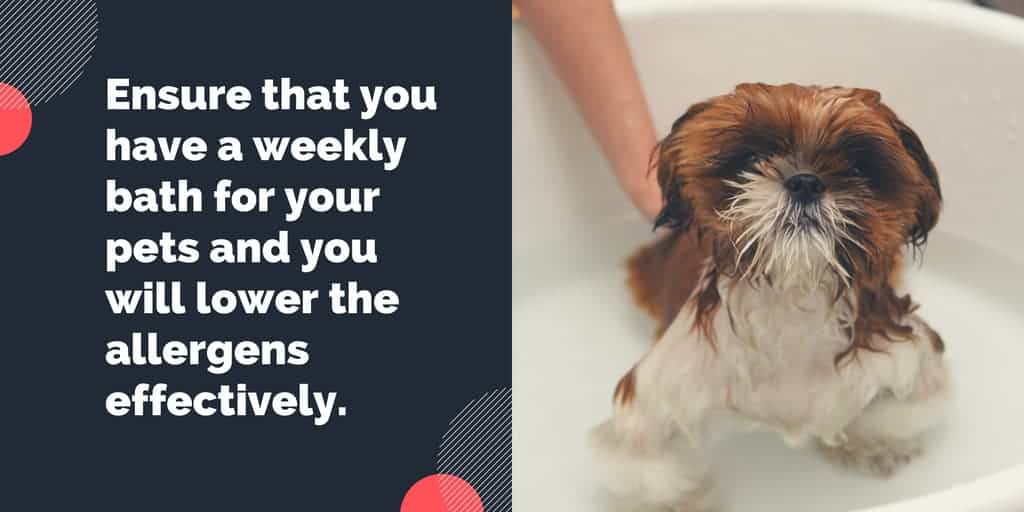
    #04. Bathe Your Pet Regularly
    Pet Allergy

    Even though dogs may be more willing to endure the experience than cats.

    Cleaning them not only reduces the number of pet allergens but it also helps in eliminating the allergens that collect in your pet’s fur, such as grasses and mold. Check The Best Dog Memes Ever

    #05. Use Air Purifiers to Manage Allergies

    Air purifiers are an excellent addition to your home if you’re battling pet allergies. They work by trapping airborne allergens like dander, pollen, and dust, significantly improving indoor air quality.

    Wondering if they’re worth it? Discover how air purifiers help manage allergies to understand how they can make a difference.

    Additionally, many purifiers are designed to specifically target allergens, helping to reduce pet-related symptoms and provide relief for your little ones by relieving allergic responses.

    #06. Immunotherapy for Pet Allergies

    When you suspect that your cat or dog might be the cause of your children’s pet allergies, then it’s time to consult the services of your allergist.

    He/she might recommend some allergy shots since they help in reducing your child’s symptoms, learn about the best dyson for pet hair.

    Simply put…

    Allergy shots work by exposing your baby to a minute amount of an allergen, then slowly increase the amount over the course of months.

    Eventually, the exposure to the allergen may no longer trigger a reaction, or it may only cause a mild reaction.

    To help keep reactions at bay, a vacuum may just do the trick. Read our in-depth reviews to find out more.

    Common Questions

    [CUSTOM_FAQ]

    In Conclusion

    There are ways of handling children & pet allergies.

    If you follow the tips that I mentioned, there shouldn’t be any allergy problem anymore.

  • Are Your Furry Friends Causing You Allergies?

    Are Your Furry Friends Causing You Allergies?

    [FEATURE_IMAGE_INSERT]

    As most of us know from surviving in this cruel world with pet allergies when I come into contact with a pet or have family members who are allergic.

    It’s possible to enjoy life and have a ‘YOLO’ time with your furry companions despite the allergic reactions, but how do you combat pet allergies?

    But where to start?

    Not that it’ll be entirely comfortable, mind you; it’s more of a doable situation to combat pet allergies in most cases.

    So, how can you manage this?

    Well, there are few guidelines you need to observe to ensure that you live life to the fullest with your loving and loyal cats.

    Most importantly:

    Stop Worrying and Start Living with These Straightforward and Practical Tips on How to Manage Your Cat Allergies

    Let’s say you never had allergies before and then, all of a sudden, you start sneezing and hiving after getting that lovable cat from your dear friend. How do you deal with that?

    Here are 7 ways:

    #01. Consider Regular Cat Baths

    It is weird, right?

    Imagine taking a cat that is known to be cleaner than any other animals due to its licking behavior, and putting him/her in a tub and cleaning them.

    Well, fear not.

    It isn’t entirely weird.

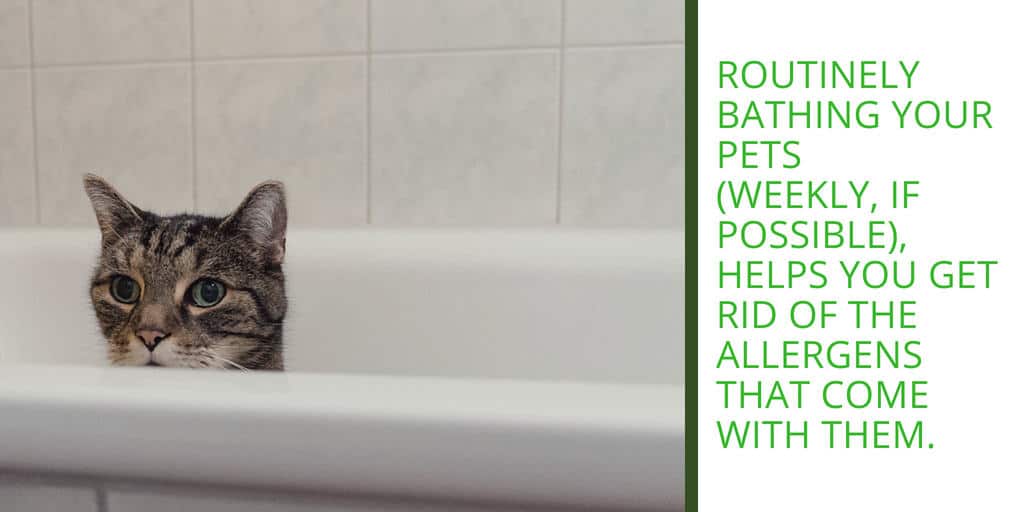
    Routinely bathing your pets (weekly, if possible), helps you to get rid of the allergens that come with them.

    Cat Bath

    Nothing trumps down the ugly allergens1  that live in their fur than a proper cleansing.

    Therefore…

    With the right shower gels and veterinarian-recommended soaps, cleaning your cat will allow you to strip the allergens off the surface and wash them down the drain.

    You can also seek the services of moistened cloths.

    #02. Ensure That You Brush Your Cat Frequently

    Brushing removes the undercoat (which can trap the allergens). It helps you lift and remove the offending molecules effectively.

    So, consider a twice weekly brushing inbetween bathing, then followed by moistened cloth “bathing.”

    #03. Groom the Cat in a Professional Manner

    Always make sure that your cat’s hair is at a manageable length can help.

    Cats with long hair, or those that can no longer groom themselves adequately, are the ones that need regular professional clipping.

    #04. Pay a Visit to the Vet

    A cat with a skin disease or self-grooming difficulties is more likely to wreak allergic havoc on allergic household members.

    But let me tell you this:

    To avoid such a situation, take the cat to your local vet, and you can get the best advice on how to deal with such an issue.

    Addressing these matters with your vet’s assistance can be transformative for the cat and also for pet allergic humans.2 

    #05. Switch Out the Old Filters for New Ones

    Filters break down often and thus making sure that you change them every two weeks or so will help you in reducing the amount of dander in the house to manageable levels.

    #06. Ensure That You Clean Strategically

    For effective routine cleaning, investing in a pet-hair vacuum for pet hair can be a godsend. These specialised vacuums are designed to tackle stubborn pet hair, making your home more comfortable and reducing allergens in the air.

    Most vacuum cleaners for pet hair are hassle-free, providing a perfect solution for maintaining a healthier atmosphere for you and your family. However, cleaning alone isn’t always enough to address allergy symptoms.

    An air purifier for allergy relief can also be a big help, offering advanced filtration to trap allergens like pollen, dust mites, and pet dander. But you might wonder, is it worth buying an air purifier to help control allergies?

    Many experts agree that the right air purifier can significantly ease allergy reactions, creating a fresher and cleaner indoor environment.

    By combining regular vacuuming with a high-quality air purifier, you can make your home a haven from allergens and improve the overall air quality for you and your loved ones.

    #07. Seek Medical Attention from Your Allergist

    Love thyself and be kind to yourself and others by seeking professional help for any pet allergies.

    The allergist will recommend some drugs that will help tone down the reactions, and you might also get to know the exact trigger to your allergies.

    Simply put…

    You might be surprised to find out your cat is not the issue, but the pollen3 and dust they drag into your house could be the problem.

    Check the best cat memes ever and the History of Vacuum Cleaners.

    Therefore, MAKE SURE you visit the doctor ASAP!

    Common Questions

    [CUSTOM_FAQ]

    In Conclusion

    You don’t have to worry about allergies anymore if you follow these steps to combat pet allergies. Your sneezing, eye-watering days are over!

    Read our vacs for allergies reviews to find the right tool to combat pet allergies.

  • In Need of a Laugh? These Memes Are CATastrophically Funny!

    In Need of a Laugh? These Memes Are CATastrophically Funny!

    [FEATURE_IMAGE_INSERT]

    Cat Meme 1
    Below you’ll find some if the BEST cat memes.
    Cat Meme 2
    Cat Meme 3
    Cat Meme 4
    Cat Meme 5
    Cat Meme 6
    Cat Meme 7
    Cat Meme 8
    Cat Meme 9
    Cat Meme 10
    Cat Meme 12
    Cat Meme 11
    Cat Meme 14
    Cat Meme 15
    Cat Meme 18
    Cat Meme 19
    Cat Meme 19
    Cat Meme 20
    Cat Meme 21
    Cat Meme 22
    Cat Meme 23
    Cat Meme 24
    Cat Meme 25
    Cat Meme 26
    Cat Meme 27
    Cat Meme 28
    Cat Meme 29
    Cat Meme 30
    Cat Meme 31
    Cat Meme 32
    Cat Meme 33
    Cat Meme 34

    I hope the best cat memes brightened your day!

    Make sure you check out my in-depth article on the best vacuum for pet hair and best vacuum for pet hair and hardwood floors and carpet

    Interested in learning more? Take a look at some of our most popular articles!

  • Are You Struggling With Pet Hair in Your Home?

    Are You Struggling With Pet Hair in Your Home?

    Pets bring joy and love to my homes. Having a cat or a dog means that you’ll never run out of warm cuddles and you’ll have the pleasure of having a loyal companion.

    However…

    It can be difficult and infuriating to keep your home pet hair free.

    Keep in mind all the responsibilities that come with owning a home like gardening, taking care of the kids and having a pet.

    Keeping up with the pet hair can fall on the back burner more times than not. How can you manage reactions to pets?

    It’s true…

    Most times, you can feel like there’s pet hair on every item you own, even in areas your pet has never touched.

    Your custom-designed carpets and clothes are fair game for pet hair, especially if you own one with long hair.

    So, how do you go about finding the keeping your home pet hair free?

    [FEATURE_IMAGE_INSERT]

    Fortunately for you, you no longer have to fear. With some occasional maintenance and a few straightforward tips, you can tackle the pesky problem of pet hair at home in no time.

    Tackle Your Household’s Pet Hair Issue So You Can Get Back to Cuddling Your Pet

    Some Simple Tips & Tricks

    Check out these simple and practical tips for a smooth and stress-free time when trying to manage pet hair in your home. See also the best pet hair remover.

    #01. Start with Your Furry Friend First

    The first step in managing any issue is tackling the problem head-on, and in this case, it’s handling your pet.

    So first…

    Try making a routine of grooming your dog since this helps in purging any dead hair follicles1  from your pet’s coat.

    Pets Grooming

    You also need to bathe them regularly to reduce the amount of hair that your pet sheds, and pet train them to stay away from some regions of the house, like your bedroom and your bed.

    #02. Keep Up with Laundry

    Pet hair builds up on your sheets, pillows, curtains, carpets, among other items and it can be challenging to deal with over a specific period.

    Therefore, best of all is to…

    Get into the routine of washing your sheets and pillowcases regularly.

    For the cumbersome sets of furniture like sofas, you can result to using removable slip-covers that you can wash regularly.

    #03. Consider Your Flooring Options

    Carpets and rugs are the number one culprits when it comes to amassing pet hair.

    Your dog’s or cat’s fur can quickly get stuck in the fibres of your carpets and rugs.

    Moreover, your wall-to-wall carpeting design can create a difficult task for you, since the laundry will be too much.

    So, it’s vital to get creative and invest in a cheap vacuum for pet hair – to keep the pet hair out.

    And then….

    Instead of relying on carpets, you can also opt to switch to hardwood2  or tile floors.

    They are way easier to clean and even vacuum than the carpeted floors.

    #04. Become Creative and Find Other Ways to Deal with the Pet Hair Menace

    You can slave away a whole day trying to get rid of the pet hair menace from your home, but there will always be traces of their locks left on floors, towels, and other areas they frequently visit—even places you’d think they can’t reach. It can be an exhausting battle.

    To stay ahead of the game, remember to keep a few lint rollers handy for a last-minute de-hair session on furniture and clothing. They’re lifesavers when you’re short on time or expecting guests.

    You can also choose to dust the house regularly, but let’s face it—dusting alone often isn’t enough. Instead, consider combining routine cleaning with some highly effective pet ‘de-hairing’ techniques, such as using vacuums designed for pet hair.

    For a comprehensive solution, an allergen-reducing air purifier can also be a big help in keeping allergens like pet dander and dust under control.

    Curious if it’s the right investment for you? Learn how air purifiers help alleviate allergies and discover the transformative impact they can have on your indoor air quality.

    For those looking to up their game, trying the best Dyson vacuums can offer powerful results, making cleaning up after your furry friends easier than ever. With the right tools, maintaining a fur-free home is not only possible—it’s simpler too.

    #05. Clean Even Those Hard-to-Reach Areas

    Do not forget to clean the attics and pent rooms since your pets can be spending most of their times there.

    You can sweep up the areas or vacuum them at least once a week.

    Simply put…

    Removing pet hair from your haven will help minimize allergy discomfort 3  and also make your home more put together.

    Common Questions

    [CUSTOM_FAQ]

    In Conclusion

    Pet hair can be such a drag, but if you follow these simple tips and tricks, you can keep your home pet hair free.

    You can now be on top of cleaning any pet hair from your home! For more information, check out our online vacuum cleaner reviews.

  • Do You Need a Pick-Me-Upper? These Dogs Will Do the Trick!

    Do You Need a Pick-Me-Upper? These Dogs Will Do the Trick!

    [FEATURE_IMAGE_INSERT]

    If you love dogs just as much as I do then these best dog memes are perfect for you…

    Dog Meme 2
    Dog Meme 1
    Dog Meme 3
    Dog Meme 4
    Dog Meme 5
    Dog Meme 6
    Dog Meme 7
    Dog Meme 8
    Dog Meme 9
    Dog Meme 10
    Dog Meme 11
    Dog Meme 12
    Dog Meme 13
    Dog Meme 14
    Dog Meme 15
    Dog Meme 16
    Dog Meme 17
    Dog Meme 18
    Dog Meme 13
    Dog Meme 19
    Dog Meme 20
    Dog Meme 21
    Dog Meme 22
    Dog Meme 23
    Dog Meme 24
    Dog Meme 25
    Dog Meme 26
    Dog Meme 27
    Dog Meme 28
    Dog Meme 30

    Dog Meme 29

    I hope the best dog memes made your day a whole lot better!

    Make sure you check out my in-depth article on best vacuum for dog hair.

    See the best vacuum cleaner for hardwood floors and shark vacuum bagless.

  • Do You Need a Giggle? Check These Cute Pet Memes!

    Do You Need a Giggle? Check These Cute Pet Memes!

    [FEATURE_IMAGE_INSERT]

    All animal lovers unite! Have a look at the most adorable, best pet memes of all time!

    Pet Meme 1
    Pet Meme 2
    Pet Meme 3
    Pet Meme 4
    Pet Meme 5
    Pet Meme 6
    Pet Meme 7
    Pet Meme 8
    Pet Meme 9
    Pet Meme 10
    Pet Meme 11
    Pet Meme 12
    Pet Meme 13
    Pet Meme 14
    Pet Meme 15
    Pet Meme 16
    Pet Meme 17
    Pet Meme 18
    Pet Meme 19
    Pet Meme 20
    Pet Meme 21
    Pet Meme 22
    Pet Meme 23
    Pet Meme 24
    Pet Meme 25
    Pet Meme 26
    Pet Meme 27
    Pet Meme 28
    Pet Meme 29
    Pet Meme 30
    Pet Meme 31
    Pet Meme 32
    Pet Meme 33
    Pet Meme 34
    Pet Meme 35
    Pet Meme 36
    Pet Meme 37
    Pet Meme 38
    Pet Meme 39
    Pet Meme 40
    Pet Meme 41
    Aren’t these just the best pet memes?

    Make sure you check out my in-depth article on the best vacuum for pet hair and bagless vacuum reviews

  • Do You Need to Remove Pet Hair From Your Home?

    Do You Need to Remove Pet Hair From Your Home?

    [FEATURE_IMAGE_INSERT]

    Isn’t it glorious to have a furry companion in your everyday family life?

    But how do you go about removing pet hair from your home?

    Pets bring people so much joy and love. Unlike humans, pets are always happy and excited to see you, even when the day seems too dull to be happy.

    They make excellent companions and keen listeners; they make you feel comfortable and will cheer up your sad soul. Pets also do funny things that’ll make you smile!

    But where to start?

    Look at this:

    According to some doctors, there’s no better stress reliever in the world than a cuddle with your furry friend.

    However…

    With all the joy and laughter come some significant issues.

    Especially when your pets live with you in the house. Pet hair clings to everything: it sticks to your clothes, upholstery, carpets and even to your curtains.

    Therefore…

    Doing a good job of pet hair removal can be a nightmare if you don’t use the proper techniques.

    That’s why there some vital tips you must follow so you can to get your carpets and curtains free from pet hair.

    How Does Pet Hair Get Stuck to Your Curtains & Carpets?

    Pets love running into the fields and dirt.

    So, after they’re done for the day, they drag in all the allergens1 they’ve collected from the wild.

    Then, they roll over the carpets and deposit these allergens and their fur onto the bespoke carpet material.

    And that’s not the only thing…

    You might think that curtains are immune to pet hair.  But, cats love to rub against the soft cosy curtains, and they’re always looking at the outside view.

    So, how to remove these lingering pet hair and allergens? Here are a few tips and tricks.

    #01. Hand-Washing Your Carpet & Curtain is a Big ‘No!’

    If you’ve ever tried brushing pet hair from your carpets and curtains, you probably know how futile it is.

    So, instead of struggling and slaving with a brush, get some professional help to get rid of your pet’s hair effectively.

    On the other hand…

    You might also get tempted to load your curtains into the washing machine for a good wash.

    Don’t!

    This is a terrible mistake since the pet hair can get stuck into the material even deeper. It’ll be an impossible task to get rid of the pet hair after that.

    #02. Clean Frequently

    To remove pet hair from the surface of your carpet, baking soda is your best friend.

    Sprinkle the carpet with a little powder and leave it for a few hours.

    Apart from removing the pet hair or fur, baking soda also helps to deodorize the room, leaving it fresh and 99.99% clean.

    After a few hours, make sure you get the Vacuum For Pet Hair and vacuum up at least 99.9% of the pet hair and any other unwanted things on the carpet.

    Think about investing in a powerful vacuum cleaner that will make your life so much easier!

    The best robot vacuum cleaner and the shark cordless vacuum are so pleasant to clean with!

    #03. Remember, Rubber is a Golden Tool for Pet Hair Removal

    Before taking down your curtains, get some rubber tools: a pair of rubber gloves and a rubber brush. They work magic.

    Simply put:

    Rubber is the perfect pet hair removal option because it creates static electricity that draws out pet hair.

    You can even try moistening your rubber tool for more effective pet hair removal.

    Simply rub down all the hairy bits, and your gloves or rubber brush will instantly get rid of the shed hair.

    #04. Other Alternatives to Remove Pet Hair From Your Furniture

    If you don’t have a pair of rubber gloves or a brush, consider using a damp sponge to catch some of the pet hair.

    You can also spray a mixture of fabric softener and water onto the curtain and wipe the pet hair off. Your curtains will look spic and span.

    #05. Replace the Carpet & Curtains

    If you’re really struggling to remove pet hair from your furniture, consider replacing the carpets curtains. Reupholstering furniture is also a good alternative.2 

    You also might need to start putting down some rules and keep some carpeted areas pet-free.

    However…

    If you can’t seem to keep them away, switch from carpeting to tiled or hardwood floors.3 

    Instead of velvet, non-machine washable curtains also work well or pick out some lovely washable curtains or drapes.

    Common Questions

    [CUSTOM_FAQ]

    In Conclusion

    So, next time you see your pet’s hair on your furniture, carpets or curtains, you don’t need to panic or run away, pet hair removal can be easy.

    You can simply follow these tips and tricks for pet hair removal in a jiffy! To find out more about how to rid your home of pet hair, give our vac reviews a read.

  • Is Having An Air Purifier A Necessity?

    Is Having An Air Purifier A Necessity?

    [FEATURE_IMAGE_INSERT]

    Why exactly are air purifiers a necessity?

    You may not realize it, but there is an invisible world all around you. This includes the air that I breathe and the microscopic particles floating in it.

    Unfortunately, some of these particles pose a health risk to my bodies. One way to protect your family from these harmful contaminants is by using an air purifier in your home.

    But where to start?

    We’ll show you why an air purifier should be considered a necessity for every home.

    Important Reasons to Have an Air Purifier

    There are several important reasons why an easy-to-use air purifier is a necessity in your home. Here are some reasons why you should have one:

    • They can protect you from asthma triggers¹.
    • They help control allergies and congestion by filtering out anything floating in the air around you, such as dust mites, pollen spores, mold spores, and other allergens.
    • They work well to eliminate odors that come from pets or smoking inside your home or car.
    • They can help keep the air in your home clean and smelling fresh by getting rid of any unwanted smells.
    • They work well to reduce other health risks that come from breathing contaminated air, such as flu viruses, dust mites, or carbon monoxide gas leaks.

    If you have a family member with asthma or allergies, this is especially important for them.

    Air purifiers are definitely something to consider having in your home if someone suffers from either of these conditions because they could make a big difference when it comes to their overall quality of life.

    The best place to use an air purifier would be in small areas where there is not much room like bedrooms and offices, since smaller spaces often get dirtier faster than larger ones.

    In fact, if someone is not feeling well or they are experiencing symptoms of asthma, allergies, and congestion, it may be a good idea to use an air purifier in their bedroom at night while they sleep.

    Important Reasons

    What Should Be Looked at When Buying a Good Air Purifier?

    When you’re looking for an air purifier to buy, there are some important factors that you need to consider. Here are some tips to keep in mind:

    • You should look at the size of a purifier before buying it. Do you need one for your bedroom or living room? Or do you need an air purifier that can be placed throughout your entire home?
    • The type of filters used on a unit is important as well. Look for high-quality HEPA filters² since they are able to capture and eliminate most mold spores, dust mites, pollen spores, pet dander, and other allergens floating around in the air.
    • Some units have ionizers built into them, which is another great way to get rid of odors and any unwanted particles floating through the air too. If possible, you may want to consider buying a unit like this.
    • You also need to think about the noise level of any air purifier you buy because some can be very loud and annoying while others are much quieter. If possible, try finding an air purifier that is as quiet as possible so it will not make too much noise when placed in your home or office where people spend time every day.
    • Check what kind of warranty is included with an air purifier before making a purchase since warranties do vary from model to model. Choose one that offers at least a two-year warranty for peace of mind and long-term protection if anything goes wrong with the unit over time.

    There are several important factors that need to be checked carefully whenever you’re considering buying an air purifier.

    If you follow these tips, it should help ensure that the unit you buy is a good one and will keep your home or office clean while protecting family members’ health too.

    Buying a Good Air Purifier

    Air Purifiers Have Two Broad Categories

    There are two broad categories of air purifiers³ to consider when buying one, and they include:

    Passive Filtration

    Passive filtration air purifiers work by filtering out contaminants in the air through a chemical process that takes place within a filter.

    This type of unit cannot capture anything smaller than .003 microns, which means it does not remove small viruses and bacteria from the air as ionizers can.

    However, this kind of purifier works well for smoke particles and other larger-sized pollutants floating around in your home or office.

    Active Filtration

    An active filtration system uses an electronic pump to push clean filtered air into the room, while simultaneously drawing dirty contaminated indoor air across an electronically charged HEPA filter.

    Once cleaned, this newly refreshed supply of non-contaminated fresh ambient air is then pushed back into the room.

    This kind of purifier works to filter out bacteria, allergens, and other contaminants in this way so it can improve your indoor air quality too.

    Two Broad Categories

    How Do Various Types of Air Purifiers Work?

    There are four basic types of air purifiers to consider when you’re looking for the right one. They include:

    HEPA Filtration Air Purifier:

    This type of purifier is able to capture 99.97% of all airborne particles larger than .003 microns that pass through the filter, including dust mites, pet dander, pollen spores, mold, and other allergens too.

    Ionizer Air Purifier:

    An ionizer air purifier works by releasing a stream of negatively charged ions into the room to remove allergens and other pollutants in this way.

    This makes it another great choice for people who want their homes or offices free from dust mites, pollen spores, mold spores, pet dander, and other contaminants too.

    Ionic air purifiers are also very effective when used on odors caused by smoke or even pets, since they work well at removing foul fumes that give your home a dirty odor over time as well.

    Ozone Generator Air Purifier:

    This type of unit creates ozone gas, which then attaches itself to particles floating in the indoor environment.

    Once the ozone attaches itself to these contaminants, it becomes a powerful oxidizing agent which can destroy odors and pollutants in this way so you breathe easier again.

    Negative Ion Generator Air Purifier:

    Using negative ions released into a room by an ionizer air purifier helps remove particles from the air as well as toxins, since they attach themselves to airborne allergens like cigarette smoke or other fumes that may be found around heavy machinery at work, or within your home over time.

    Various Types of Air Purifiers

    Common Questions

    [CUSTOM_FAQ]

    In Conclusion

    You and your family deserve to breathe the cleanest air possible. An air purifier is a necessity for homeowners who want their loved ones to live healthier lives.

    The most important thing you can do for yourself, your kids, and all of those living in your home is invest in an effective indoor air quality improvement device that will clean the air you breathe, making everyone happier and healthier.

    I trust you are well-informed and that you realize, now more than ever, the reasons why air purifiers are a necessity.

    Our air purifier reviews are a great way to learn more!

  • Do You Know What the Pros & Cons of an Air Purifier Are?

    Do You Know What the Pros & Cons of an Air Purifier Are?

    [FEATURE_IMAGE_INSERT]

    Are you wondering about the pros and cons of air purifiers?

    Air purifiers have become a popular choice for people who suffer from allergies, asthma, or other respiratory illnesses.

    They are also becoming more and more popular among healthy individuals to keep the air in their homes free of pollutants.

    But where to start?

    We’ll explore the pros and cons of getting an air purifier so you can make an informed decision about whether they’re right for you.

    How Do Air Purifiers Work?

    Air purifiers work by removing pollutants¹ from the air. Depending on what type of purifier you get, it might use a filter to remove particles like dust and pet dander or chemicals like formaldehyde present in many household products.

    They also work by releasing negative ions² into the air; these bind with positively charged molecules (i.e., pollutants) before they can do any damage to your health.

    As an alternative, some purifiers use ozone to clean the air³.

    This is effective because it will oxidize pollutants and neutralize them to be removed by your home’s HVAC system or filtered out of the room altogether.

    Air Purifiers Work

    What Are the Benefits of Air Purifiers?

    There are many benefits to using an air purifier. Here are some of the most important.

    • They reduce respiratory disease by removing allergens from the air before they can cause an allergic reaction, an asthma flare-up, or other breathing problems. This is especially true for those who suffer from allergies and live with pets or smokers.
    • Due to their ionizing properties, negative ions found in many kinds of air purifiers also help combat depression and improve mood.
    • Dust particles and other pollutants can cause problems such as mold growth in your home. Air purifiers can help prevent this by removing these particles from the air before they have a chance to settle on surfaces and create potential health hazards.
    • If you’re going through renovations or remodeling your home, using an air purifier can help remove dust and debris from the air so you won’t suffer an allergic reaction or respiratory problems.
    • Ozone generators can also help sanitize your home by removing pathogens such as viruses, bacteria, mold spores, and other micro-organisms that can cause illness.
    Benefits of Air Purifiers

    What Are the Downsides of Air Purifiers?

    There are also some drawbacks to using an air purifier. Here are some of the most common ones you should know about before making your purchase.

    • Air purifiers can be expensive. It’s not just the cost of buying one, you will also have to pay an ongoing operating and replacement fee for filters or other parts that need replacing as time goes on.
    • Some purifiers can be harmful to your health because of the chemicals they use. This is especially true for ozone generators and ionizing air cleaners that release negative ions into the room; these may strip oxygen from water molecules in your body tissue, which will increase oxidative stress on cells and cause damage over time.
    • They can be noisy, and they’ll need to run for several hours a day to clean your home’s air supply effectively. If you live with someone sensitive to noise, such as an infant or elderly family member, this could be a problem. Think about where the purifier will sit before making your purchase; if it doesn’t fit into that space due to its size or sound levels, keep looking until you find something that works better.
    • Using ionizing purifiers may cause problems with electronic devices like computers and TVs by creating static electricity on their surfaces, damaging internal components over time (especially true of plasma TVs). It might also affect other small appliances like cordless phones and cell phone chargers.
    • Negative ion generators can also be dangerous to animals and people who have pacemakers or other internal medical devices. These negative ions may cause problems with people with asthma, so you should ask your doctor before using one if this applies to you.
    Downsides of Air Purifiers

    What Things Should You Consider Before Buying an Air Purifier?

    There are a few things you’ll need to consider before buying an air purifier. Here’s what they are and why each is important:

    • Think about the size and configuration of your home. Will you need a large purifier that can handle an entire floor or just one small enough to rest on a nightstand?
    • If allergies are your biggest concern, will it be more effective for you to use an ionizing air cleaner with negative ions instead of HEPA filters which reduce allergens by trapping and removing them from the air (though they don’t emit negative ions)?
    • If you live near a primary source of pollution, such as a highway or factory, a HEPA purifier with carbon filtration may be your best choice.
    • How much can you spend on one? Can you afford it outright without having to finance it over time? Or will you need to shop around for lower prices before buying?
    • Is there a warranty included and, if so, how long does it last, and what are its limitations (for instance, some companies won’t cover damage caused by certain chemicals used in ionizing cleaners)?
    Things Should You Consider

    Other Ways to Improve Air Quality

    Although using an air purifier can help you breathe more accessible, it isn’t always the most practical solution. Sometimes other ways are more feasible and maybe just as adequate for your needs.

    Here are some suggestions:

    • Vacuuming with a HEPA filter will remove dust from carpets that could trigger allergies or asthma attacks in sufferers if left unattended over time.
    • Investing in an electronic air cleaner plugs into a wall outlet is another option; they don’t need replacement filters but still effectively clean household air without chemicals (some models include ionizers).
    • If you don’t want to spend money on either of these options, simply opening windows when weather permits might be enough to reduce allergens and pollutants in your home, especially if you live on a somewhat busy street or next to an industrial area.
    • Cleaning carpets and upholstery with steam and plain water can effectively minimise allergens and other contaminants.
    • Scrubbing floors every week will pick up the dirt particles that circulate through your house when it’s cleaned by hand (it may be better than using a vacuum since some vacuums don’t have HEPA filters).
    Air Quality

    Common Questions

    [CUSTOM_FAQ]

    In Conclusion

    Air purifiers will not completely remove allergens or bacteria, but they can help reduce the number of irritants in your home.

    They are a good option for people who want to minimize their exposure to dust and pet dander if they cannot afford an expensive HEPA filter system.

    Suppose you’re looking for something more potent than just filtering out particulates.

    In that case, an air purifier may be worth it because this type of unit has some benefits over other types of devices like humidifiers, which only add humidity into the air, leading many people with allergies to avoid them altogether.

    It is important to weigh up the pros and cons of air purifiers before going out to buy one.

    To learn more about air purifiers, we recommend checking out our air purifier reviews.

  • Can Air Purifiers Work for Pet Owners?

    Can Air Purifiers Work for Pet Owners?

    [FEATURE_IMAGE_INSERT]

    If you’ve ever had a pet in your home, you know it can affect the air quality.

    Pets produce dander and hair, which can accumulate on carpets and furniture, leaving behind allergens.

    Therefore, it’s essential to invest in an air purifier for pet owners in your home to help improve the indoor air quality for both you and your pets.

    But where to start?

    We’ll discuss how an air purifier works, the different filters available, and some questions people often ask when purchasing a new unit.

    How Do Pet Allergies Work?

    An allergic reaction occurs when the immune system1 overreacts to a perceived threat. This is usually in response to an airborne allergen such as pollen, dust, mold spores, and pet dander.

    The reaction can affect both humans and animals that come into contact with these allergens, which include:

    Pet Allergies

    Pet Dander

    Pet dander is a common cause of animal-related sensitivities. It’s mainly composed of the dead skin that falls off of pets. It can be found in your pet’s saliva, urine, and body fur.

    The dander floats into the air when you brush or play with your furry friend, which will cause allergic reactions if inhaled by humans who are sensitive to it.

    Pet Hair

    Pet hair is another common cause of pet allergies. Hair can be easily spread throughout your home when you brush or play with your furry friend, which will then become airborne and settle on clothing, furniture, and carpets.

    Pet Hair

    Dust Bunnies

    Dust bunnies2 are another common source of pet allergies.

    Dust can accumulate on your carpets and furniture if not cleaned regularly, making it a perfect environment for dust mites to thrive in, which in turn causes more allergy problems.

    Pet Saliva & Accidents

    Pet saliva is also a common source of pet allergies. When your furry friend licks their paws, they spread the saliva around, which becomes airborne and settles on clothing, furniture, carpets, etc.

    It can cause an allergic reaction if not cleaned regularly.

    Cat Allergies vs. Dog Allergies

    The most common pet allergies are cat and dog allergies. Some people may be allergic to both, while others only react when around one or the other.

    Cat Allergies: Cat dander is known for causing more problems than its furry counterparts, but you can still find high levels of skin cells in your pet’s saliva. This will cause an allergic reaction if not cleaned regularly.

    Cat urine has also been found to cause health issues such as asthma attacks and migraines. It contains higher amounts of ammonia which irritate your respiratory system even more than dog hair (which we’ll get into shortly).

    Dog Allergies: Dogs produce fewer allergens than cats do, and they groom themselves much better by their paws instead of using their tongue, which spreads the dander around.

    They also produce a lot less saliva than cats, but their fur does cause problems because it contains high levels of skin cells that end up on your clothing and furniture after you’ve played with them or brushed them.

    Cats And Dogs

    Can an Air Purifier Work on Pet Dander?

    Various air purifiers can help reduce the amount of dander and hair in your home.

    It has been found that an air purifier with a filtration system containing active carbon is best at lowering pet allergies because it traps irritants such as dust, pollen, mold spores, dander, and other contaminants to improve indoor air quality.

    Work on Pet Dander

    HEPA Filter

    The HEPA filter3 is the most common type of air purifier. It traps 99% of particles as small as 0.03 microns such as dust, pollen, pet dander, and mold spores to improve indoor air quality by trapping allergens in your home that can cause respiratory problems.

    Ionizers

    Ionizers contain electrical charges that attach to contaminants in the air and can cause them to stick together.

    This causes larger particles such as pet dander, hair, and dust mites which are easier to inhale instead of smaller allergens like pollen or mould spores.

    Ionizers

    Carbon Air Filters

    Carbon air filters are also famous for removing pet dander, hair, and other particles in the air.

    They work by trapping contaminants using activated carbon, a porous form of carbon that contains chemical properties to trap gases, odors, chemicals, and irritants.

    PECO

    PECO4 or photoelectrochemical oxidation is the newest air purification technology that uses ultraviolet light to oxidize contaminants giving them an electrical charge which causes them to stick together.

    This makes larger particles such as pet dander, hair, and other allergens easier for you to inhale instead of smaller ones like pollen or mould spores.

    Electrostatic Precipitators

    Electrostatic precipitators work by using both positive and negative ions within a high voltage field so they can trap pollutants in your home more efficiently than ionizers do because it has better contact time with contaminants.

    The best part about this type of filter is that it doesn’t produce ozone at all, unlike other types of filters, including HEPA filters which are great for reducing allergens but do produce trace amounts of ozone.

    What Type of Air Purifier Is Best for Reducing Pet Dander?

    There are several different air purifiers that you can choose from to reduce the amount of pet dander in your home.

    It would help if you were looking for an air purifier with a HEPA filter and one that contains active carbon because it’s been found they’re most effective at reducing allergens such as dust, pollen, mold spores, and pet dander.

    This is best used by people who suffer from asthma or allergies caused by these irritants.

    It would help if you also looked for an air purifier with a carbon filter because they trap gases, odors, chemicals, and other irritants.

    An ionizer can help remove larger particles such as pet dander from home.

    Still, you should get one that doesn’t contain ozone, or it could cause respiratory problems instead of improving them, which is why I recommend staying away from these types of filters.

    Best for Reducing Pet Dander

    Other Ways to Reduce Pet-Related Allergens

    There are many other ways to reduce pet-related allergens in your home without using an air purifier. They include:

    Regular Bathing of Pets

    Bathing your pets regularly will help reduce dander and hair by getting rid of particles stuck to their fur.

    Brushing or combing your pet daily can also remove some allergens from their coat before they spread them around your house so that you won’t have as many problems with allergies caused by these irritants.

    Reduce Pet-Related Allergens

    Limit Area of Activity for Pets

    Limit the area of activity for your pets to one or two rooms in your home instead of letting them roam free throughout all regions.

    This will allow you to clean these pet-related allergens more frequently, which keeps air quality high and reduces any problems from breathing in these irritants.

    Pet-Proof Your Home

    It would help if you also considered pet-proofing your home to remove any allergens that can get stuck on furniture and other items inside your house, such as clothes, pillows, or anything else you don’t want to be covered with dander.

    You should avoid keeping pets where people sit because it will cause problems for anyone who suffers from allergies caused by pet dander, including respiratory issues like asthma.

    This is why I recommend getting an air purifier if possible even though there are many other ways to reduce the amount of pet dander in a home without one.

    Regular Cleaning

    Regular cleaning of your home will help reduce pet-related allergens by getting rid of hair, dander, and other irritants that can cause problems for people with allergies.

    You should try to clean at least once a week in high traffic areas because it reduces the amount of these types of irritants that end up on carpets or furniture.

    This is what you’ll want to avoid when choosing an air purifier if possible even though there are many other ways to keep them out without having one.

    Regular Cleaning

    HVAC Maintenance

    Regular HVAC5 maintenance will help reduce the amount of dander from allergens such as dust, pollen, and mold spores by keeping your home’s ventilation system clean.
    This is very important if you have pets because it means that all air that comes into your house flows through a more hygienic filter, reducing any problems caused by breathing in these types of irritants.

    Common Questions

    [CUSTOM_FAQ]

    In Conclusion

    There are many benefits for pet owners to owning an air purifier, but the most important is that they help keep your home cleaner.

    Airborne particles can be harmful or irritating to you and your pets.

    Using other methods like vacuuming will also remove some contaminants from carpets and floors, however, it’s not enough.

    Air purifiers should always go in high-traffic areas where there may be a lot of dirt on hard surfaces throughout the day. This includes living rooms, kitchens, or any room with carpeting.

    To learn more about these gadgets, check out our purifier reviews.