Category: Vacuum Cleaners

  • Are You Curious to Find Out About the History of the Vacuum Cleaner?

    Are You Curious to Find Out About the History of the Vacuum Cleaner?

    [FEATURE_IMAGE_INSERT]

    You might think you know all there’s to know about vacuum cleaners, but think again!

    Whether you’re a cleaning enthusiast or just love to learn something new, the ByPurify team has compiled 20 facts about vacuums that’re sure to captivate and entertain.

    Keep reading to discover the fascinating history and evolution of the modern-day vacuum

    The 1st Known Electric Vacuum Was Invented in Iowa

    The first successful electric vacuum cleaner was invented in Iowa, USA, in 1899 by a man named John Thurman. 

    Thurman’s device used an electric motor to create suction and a filter to collect dust and debris, paving the way for modern vacuum cleaners.

    The 1st Feasible Vacuum Was Invented in Britain

    The first practical vacuum cleaner was patented by Hubert Cecil Booth, a British engineer, in 1901. 

    Booth’s machine was large and horse-drawn, and it was primarily used for cleaning large buildings such as hotels and factories. 

    It wasn’t until 1908 that the first portable vacuum cleaner was invented by James Murray Spangler, an American janitor who built a machine to help him with his cleaning work. 

    The 1st Powered Cleaning Machine Is Much Older

    In the early 19th century, mechanical carpet sweepers were invented that used a system of rotating brushes to pick up dirt and debris. 

    These sweepers were powered by hand-cranked mechanisms or foot pedals.

    Additionally

    In the late 19th century, electrically powered carpet sweepers were developed that used an electric motor to drive the brush mechanism. 

    These machines were effective at cleaning carpets and floors, but they were heavy and difficult to maneuver.

    The 1st Vacuum Sold in Britain Went to Royalty

    It’s believed that the first working vacuum designed by Booth ended up at Windsor Castle, Buckingham Palace, and Lord Chamberlain’s palace.

    The Vacuum Has a Cousin

    Carpet sweepers were developed in the 19th century and were powered by hand-cranked mechanisms or foot pedals. 

    They used a system of rotating brushes to pick up dirt and debris from carpets and floors and were an improvement over traditional brooms and carpet beaters. 

    Carpet sweepers were lightweight, portable, and didn’t require electricity, making them an attractive option for many households.

    Door-To-Door Sales Were the Norm 

    In the early days of vacuum cleaners, salespeople would often go door-to-door to demonstrate the machines and sell them to customers. 

    These salespeople would sometimes host demonstrations in their own homes or in public venues, where they would show off the capabilities of the vacuum cleaner and answer questions from potential customers.

    The 1st Mass-Produced Vacuum Was Developed in America

    The Hoover Company was founded in Ohio in 1908, and it was one of the first companies to mass-produce vacuum cleaners for household use. 

    James Murray Spangler, an American janitor who built a machine to assist him with his cleaning duties, developed the design on which the company’s first vacuum cleaners were based. 

    After eventually purchasing Spangler’s machine, William H. Hoover improved the design and started mass-producing the devices under the brand name “Hoover.”

    The Modern Vacuum Was Perfected by a Store Cleaner

    The first practical portable vacuum cleaner was invented by James Murray Spangler, who was a janitor and a department store clerk in Ohio.

    Spangler suffered from asthma and found it difficult to do his cleaning work using traditional cleaning methods such as brooms and carpet sweepers. 

    He built a machine that used a fan motor and a pillowcase to create suction and remove dust and dirt from the air. 

    William H. Hoover eventually purchased Spangler’s design, improved it, and started mass-producing the machines under the brand name “Hoover.”

    The Vacuum Was Perfected by Someone Else

    Hubert Cecil Booth, a British engineer, patented the first practical vacuum cleaner in 1901, which was primarily used for cleaning large buildings such as hotels and factories. 

    In 1908, 7 years later, James Murray Spangler, a janitor from Ohio, invented the first portable electric vacuum cleaner. 

    The Hoover Company later improved and mass-produced Spangler’s design, which contributed to the widespread use of vacuum cleaners in homes around the world.

    A New Verb Was Introduced to the English Language

    The invention of the vacuum cleaner introduced a new verb to the English language: to vacuum.1 

    The word “vacuum” itself has been in use since the 16th century, and it originally referred to a space or container from which the air has been removed. 

    However, it wasn’t until the widespread adoption of vacuum cleaners in the early 20thcentury that the word “vacuum” began to be used as a verb, meaning to clean using a vacuum cleaner. 

    The Earliest Carpet-Cleaning Machines Were Human-Powered

    Before the invention of mechanical carpet sweepers and vacuum cleaners, carpets and rugs were typically cleaned using human-powered devices such as carpet beaters and carpet sweepers.

    Carpet beaters, which date back centuries, were essentially long sticks with a paddle-like end that were used to beat dust and dirt out of carpets and rugs.2 

    This was a labor-intensive and time-consuming process that required significant physical effort.

    Innovators Pumped up the Vacuum

    Over time, innovators have continually worked to improve the performance and suction power of vacuum cleaners. 

    One notable example is the development of cyclonic separation technology, which was invented by British engineer James Dyson in the 1980s.3

    Cyclonic separation technology uses centrifugal force to separate dust and debris from the air stream, creating a more powerful and efficient vacuum. 

    There’s more

    Advancements in vacuum cleaner technology include the development of more powerful and efficient motors, the use of HEPA filters to trap allergens and other microscopic particles, and the use of lightweight and durable materials to create more maneuverable and user-friendly designs.

    The Model O Was the 1st to Hit the Market

    James Murray Spangler created the first portable electric vacuum cleaner in the United States in 1908, and he gave it the name “Electric Suction Sweeper.” 

    The Hoover Company, one of the most successful vacuum cleaner manufacturers in the world, eventually purchased and mass-produced Spangler’s design. 

    However, the name “Hoover” wasn’t used to describe the machine itself until later on, and it was originally marketed as the “Model O” vacuum cleaner.

    Centralized, Whole-House Vacuum Systems Appeared in the Early 20th Century

    Centralized, whole-house vacuum systems first appeared in the early 20th century, after the invention of portable electric vacuum cleaners. 

    The first electric-powered central vacuum system was invented by David Kenney of St. Louis, Missouri, in 1905, and it was primarily used in large commercial or industrial settings.

    However

    The development of central vacuum systems for residential use took a bit longer to gain popularity, but by the 1950s and 1960s, they had become more widely available and were gaining in popularity. 

    These systems typically consist of a large motor and filter unit installed in a central location, such as a basement or garage, with a network of pipes and inlets running throughout the house. 

    Vacuums Inspired Hair Dryers

    The first electric hair dryer was invented in the late 19th century and was based on the design of vacuum cleaners, which used a motor to create suction. 

    These early hair dryers were large, heavy, and primarily used in salons and barbershops.

    Over time, hair dryers became smaller, lighter, and more powerful, with new technologies such as heating elements and ionization added to improve their effectiveness. 

    Hoover Helped the Vacuum’s Popularity Explode After World War II

    The Hoover Company played a significant role in popularizing vacuum cleaners and helping them become a common household appliance after World War II.

    During the war, vacuum cleaner production was largely focused on meeting military needs, such as cleaning aircraft and military facilities. 

    However, after the war, there was a growing demand for vacuum cleaners among consumers as people began to focus on home cleaning and hygiene.

    Henry Dreyfuss Made the Vacuum Stylish

    Industrial designer Henry Dreyfuss played a significant role in making vacuum cleaners more stylish and visually appealing in the mid-20th century.4

    In the 1930s, Dreyfuss was commissioned by the Hoover Company to redesign their vacuum cleaner models. 

    He focused on creating machines that weren’t only functional and efficient but also aesthetically pleasing and easy to use.

    Middle-Class Americans’ Floors Suddenly Got Cleaner

    The post-World War II era saw a significant increase in the use of vacuum cleaners in middle-class American homes. 

    This was due in part to the efforts of companies like Hoover to market vacuum cleaners as a convenient and essential tool for keeping homes clean and healthy.

    Vacuum cleaners became more affordable and widely available thanks to mass production and new financing options such as installment plans. 

    The 1st Robotic Vacuum Was Named After an Extinct Arthropod

    In 1997, Swedish company Electrolux created the “Trilobite,” the first robotic vacuum cleaner. 

    The name was inspired by an extinct marine arthropod that lived over 500 million years ago and had a hard exoskeleton and many legs.5

    The Vacuum Is Still a Staple of Modern Art & Design

    The vacuum cleaner has been a source of inspiration for artists and designers for many years and continues to be a popular subject in modern art and design.

    One illustration of this is the work of American artist Jeff Koons, who in the 1980s produced a number of sculptures that drew inspiration from vacuum cleaners. 

    Koons’ sculptures were brightly colored and highly polished, blurring the line between art and consumer products.

    Why You Should Trust ByPurify

    You should trust ByPurify because, when it comes to information about vacuum cleaners, there are many sources of information available online, ranging from manufacturer websites and online retailers to independent review sites and blogs. 

    While some of these sources may provide accurate and useful information, others may be biased or unreliable.

    ByPurify is proudly unbiased and dedicated to sharing everything you need to know when it comes to the world of vacuum cleaners.

    Common Questions

    [CUSTOM_FAQ]

    In Conclusion

    Vacuum cleaners have come a long way since their invention in the early 20th century. 

    With their various designs and features, they’ve become an indispensable tool for keeping my homes and workplaces clean and healthy. 

    From the world’s most expensive vacuum to the world’s smallest vacuum, the vacuum cleaner has proven to be a fascinating subject of study.

    I hope this article could broaden your horizons about the vacuum cleaner’s fascinating history! 

    Find Out More About Modern Vacuum Cleaners: Vacuum Cleaners Reviews

  • Are You Making One of These 9 Vacuum Cleaner Mistakes?

    Are You Making One of These 9 Vacuum Cleaner Mistakes?

    [FEATURE_IMAGE_INSERT]

    Vacuuming isn’t like riding a bicycle (thank goodness!). However, a little extra know-how on how to operate and handle it can help you clean your home much better and help you to avoid making any vacuum cleaner mistakes.

    With a flick of a switch, a high-quality vacuum cleaner makes all the dust, pet dander, pollen, and dirt disappear. 

    However…

    In as much as you may rely on your device, there are practices that you need to get rid of to get the best out of this device.

    But where to start?

    Our vacuum cleaner guides are a great place to start, so keep reading!

    Here are some but a few of these common mistakes:

    #01. Keep the Device Away From the Brushes and Openings

    If you want to turn your hoover over and check out the brush roll,1  make sure that you always turn off the vacuum and unplug it.

    Here’s why:

    The brush roll is powerful enough to rip out the hair from your head, damage your clothes, and cause bodily harm.

    So, make sure that you take caution and don’t allow anything, including your fingers and clothing near the opening parts of your vacuum cleaner.

    To add to that…

    If you involve your kids in the cleaning sessions, then you must remember to share these safety warnings with them as well.

    Extension Cord

    #02. Don’t Use the Wrong Extension Cord

    Most extension cords feature a wattage or an amp rating to help consumers know what types of things they can power up.

    Too often, like most people do with their phones, many people use vacuums with extension cords that aren’t designed for them.

    Therefore…

    You can completely damage your sweeper and increase the fire risk by using an improper extension cord.

    So, avoid this bad habit and make sure you use the right extension cord as advised by the manufacturer.

    #03. Avoid Pulling the Power Cord

    Some people carry their devices by the cord or pull them out of the socket from a distance.

    Almost every vacuum user is guilty of pulling the cable from the wall socket in a bid to avoid going over and unplugging it.

    Well, let me tell you something…

    This is a mistake that you need to start erasing from your ‘bad habits journal’ today.

    According to experts, you can speed up the damage to your vacuum by abusing its cord.

    Continued yanking of the cable causes damage to the hoover, which then leads to the risk of electrocution or fire.

    So, before you start vacuuming or even when shopping for one, make sure that you inspect the ​cords to be sure they’re safe to use.

    #04. An Indoor Vacuum Cleaner Stays Inside & Keep It Away From Spills

    An indoor vacuum isn’t meant for the outdoors. Similarly, you should never use a dry vacuum device on wet surfaces.

    Here’s why:

    There are indoor/outdoor vacuums and wet/dry hoovers that are designed to handle these kinds of tasks specifically.

    If you use your indoor sweeper that’s not intended to handle wetness or spills, you can end up ruining or shortening its life.

    Coins

    #05. Pick Up All the Hard Objects

    You’re running late for work.

    So, what do you do?

    You ignore that penny and keep on vacuuming.

    If lady luck isn’t on your side, your vacuum cleaner suddenly stops, and you spend more than twenty minutes trying to figure out what the problem is.

    Well, that penny did cost you your machine and probably your job. If only you’d picked it up…

    Want to know more?

    According to studies, most people, when pressed for time, tend to ignore small items on the floor.

    Small, heavy, and hard items lead to the chipping and cracking of your vacuum’s fan blade.2 

    Therefore, knowingly vacuuming these hard and sharp objects can damage your device and cost you an arm trying to fix it.

    Therefore…

    You need to be careful before vacuuming.

    Make sure that you scan the room for these items and pick them up before doing any cleaning.

    It might be easy to clean over it and hope for the best, but it’s a lot more difficult to hand over the cash for a new machine.

    #06. Don’t Vacuum Powders

    A little dust and powder can’t hurt your vacuum cleaner.

    Nevertheless, a spilling out bottle of baby powder can clog your filters and eventually block your vacuum’s motor, thus affecting its suction.3 

    In my own experience…

    If you have a lot of powder spill issues, an outdoor and wet/dry vacuum is much more capable of dealing with these issues efficiently. 

    If you don’t have one of these, you can always revert to sweeping all the powder you can and then vacuuming the rest.

    Accessories

    #07. Remember to Use Its Attachments

    Those dusting brushes and crevice tools are your best friends.

    They help make cleaning ceilings and other hard-to-reach-spots easy and allow you to suck up all the dust and allergens from areas you might otherwise overlook, such as your furniture’s upholstery, light fixtures, baseboards, and lampshades.

    #08. Cut Out All the Tangled Hair and Strings

    If you have a brush roll that doesn’t turn, it doesn’t clean efficiently — it’s that simple.

    Moreover…

    Worse, the stress of tangled pet hair and threads can cause your motor to burn out, an issue that might cost you more than you bargained for.

    So, to avoid such a situation, you need to unwind or snip away any hair tangles, or just go for a tangle free brush roll vacuum cleaner.

    Most vacuums feature a brush roll that you can easily remove if you want to do some deep cleaning.

    #09. Maintain Your Vacuum Cleaner

    Maintaining your device takes a bit of your time.

    How hard can cleaning the brush roll, washing/replacing filters, and emptying the dirt container or bag be, anyway?

    Think about it:

    No one wants to schedule vacuuming only to find a device that’s ruined due to lack of proper maintenance.

    Therefore, before anything, you need to ensure that you double-check the manual and guidelines for care. 

    Now…

    If you don’t have the manufacturer’s manual, you can always conduct an internet search for your vacuum cleaner brand or model.

    There are high chances that there’ll be a manual for it online. It’s also vital to remember to clean out clogs in the hoses and suction pathway of the vacuum cleaner. 

    It helps in preventing the wear and tear of the vacuum’s motor.

    Common Questions

    [CUSTOM_FAQ]

    In Conclusion

    Getting out your vacuum from the cleaning closet might seem like a quick solution for any spills or messes in your home.

    However, some things aren’t meant to go into this versatile yet powerful device.

    So, before you start vacuuming your room, make sure that you take a moment to look for any items on the ground that can otherwise damage it, avoid pulling its cord, among other recommended instructions.

    You’ll save yourself stress if you know which vacuum cleaner mistakes to avoid and you won’t find yourself running to get a new device every time yours gets damaged. It’s that easy!

    Find Out More: Vacuum Reviews

  • Are You Struggling With Pet Hair in Your Home?

    Are You Struggling With Pet Hair in Your Home?

    Pets bring joy and love to my homes. Having a cat or a dog means that you’ll never run out of warm cuddles and you’ll have the pleasure of having a loyal companion.

    However…

    It can be difficult and infuriating to keep your home pet hair free.

    Keep in mind all the responsibilities that come with owning a home like gardening, taking care of the kids and having a pet.

    Keeping up with the pet hair can fall on the back burner more times than not. How can you manage reactions to pets?

    It’s true…

    Most times, you can feel like there’s pet hair on every item you own, even in areas your pet has never touched.

    Your custom-designed carpets and clothes are fair game for pet hair, especially if you own one with long hair.

    So, how do you go about finding the keeping your home pet hair free?

    [FEATURE_IMAGE_INSERT]

    Fortunately for you, you no longer have to fear. With some occasional maintenance and a few straightforward tips, you can tackle the pesky problem of pet hair at home in no time.

    Tackle Your Household’s Pet Hair Issue So You Can Get Back to Cuddling Your Pet

    Some Simple Tips & Tricks

    Check out these simple and practical tips for a smooth and stress-free time when trying to manage pet hair in your home. See also the best pet hair remover.

    #01. Start with Your Furry Friend First

    The first step in managing any issue is tackling the problem head-on, and in this case, it’s handling your pet.

    So first…

    Try making a routine of grooming your dog since this helps in purging any dead hair follicles1  from your pet’s coat.

    Pets Grooming

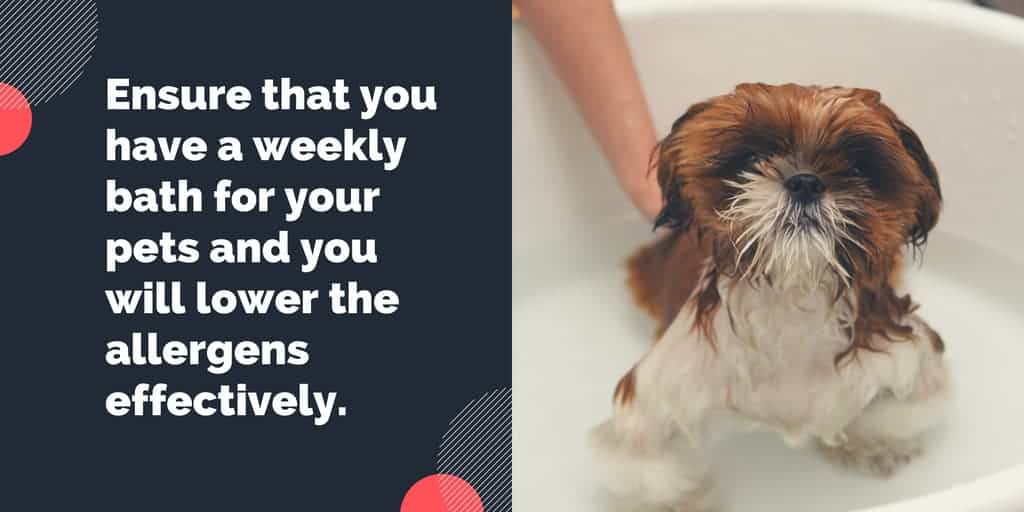
    You also need to bathe them regularly to reduce the amount of hair that your pet sheds, and pet train them to stay away from some regions of the house, like your bedroom and your bed.

    #02. Keep Up with Laundry

    Pet hair builds up on your sheets, pillows, curtains, carpets, among other items and it can be challenging to deal with over a specific period.

    Therefore, best of all is to…

    Get into the routine of washing your sheets and pillowcases regularly.

    For the cumbersome sets of furniture like sofas, you can result to using removable slip-covers that you can wash regularly.

    #03. Consider Your Flooring Options

    Carpets and rugs are the number one culprits when it comes to amassing pet hair.

    Your dog’s or cat’s fur can quickly get stuck in the fibres of your carpets and rugs.

    Moreover, your wall-to-wall carpeting design can create a difficult task for you, since the laundry will be too much.

    So, it’s vital to get creative and invest in a cheap vacuum for pet hair – to keep the pet hair out.

    And then….

    Instead of relying on carpets, you can also opt to switch to hardwood2  or tile floors.

    They are way easier to clean and even vacuum than the carpeted floors.

    #04. Become Creative and Find Other Ways to Deal with the Pet Hair Menace

    You can slave away a whole day trying to get rid of the pet hair menace from your home, but there will always be traces of their locks left on floors, towels, and other areas they frequently visit—even places you’d think they can’t reach. It can be an exhausting battle.

    To stay ahead of the game, remember to keep a few lint rollers handy for a last-minute de-hair session on furniture and clothing. They’re lifesavers when you’re short on time or expecting guests.

    You can also choose to dust the house regularly, but let’s face it—dusting alone often isn’t enough. Instead, consider combining routine cleaning with some highly effective pet ‘de-hairing’ techniques, such as using vacuums designed for pet hair.

    For a comprehensive solution, an allergen-reducing air purifier can also be a big help in keeping allergens like pet dander and dust under control.

    Curious if it’s the right investment for you? Learn how air purifiers help alleviate allergies and discover the transformative impact they can have on your indoor air quality.

    For those looking to up their game, trying the best Dyson vacuums can offer powerful results, making cleaning up after your furry friends easier than ever. With the right tools, maintaining a fur-free home is not only possible—it’s simpler too.

    #05. Clean Even Those Hard-to-Reach Areas

    Do not forget to clean the attics and pent rooms since your pets can be spending most of their times there.

    You can sweep up the areas or vacuum them at least once a week.

    Simply put…

    Removing pet hair from your haven will help minimize allergy discomfort 3  and also make your home more put together.

    Common Questions

    [CUSTOM_FAQ]

    In Conclusion

    Pet hair can be such a drag, but if you follow these simple tips and tricks, you can keep your home pet hair free.

    You can now be on top of cleaning any pet hair from your home! For more information, check out our online vacuum cleaner reviews.

  • Does Your Child Suffer From Pet Allergies & You’re Not Sure What To Do?

    Does Your Child Suffer From Pet Allergies & You’re Not Sure What To Do?

    [FEATURE_IMAGE_INSERT]

    Are you concerned that your children’s pet allergies may force you to give up on your pet?

    Well, you need ‘t worry, you aren’t alone. According to recent studies, about three in ten people with sensitivities worldwide are allergic to cats and dogs.

    However

    Sometimes I tend to jump to conclusions before getting to know the cause of the issue first.

    But where to start?

    You might realise that your pet isn’t to blame, but the pollen and dust they drag with them might be the trigger causing your allergies to flare up.

    So, get to know the exact issue first. If you don’t know which vacuum to use, read this article about Upright Vacuums and Canister Vacuums.

    Knowing Pet Allergies on a Deeper Level

    Allergens1  are everywhere in my environment. They’re present in the air, carpets, walls and even your water.

    However, they all affect us in various ways. Some affect us when I inhale or ingest them, and others when they come into contact with my skin.

    When they do so, then one can start showing some symptoms like a runny or congested nose, sneezing or itching. In extreme cases, they may cause shortness of breath.

    So, how are pets a trigger to allergies?

    Firstly, you need to know that animal dander isn’t the only thing that can trigger an allergic reaction. Dust mites,2 pollen, and mould are also common culprits.

    With pets, however, the dander is the main culprit. Pet dander is the dead skin cells that your pet sheds, which when it comes in contact with an allergy-prone human, causes some allergic reactions.

    Their droppings and saliva may also be the cause of the reactions, small cordless vacuum could be a good alternative.

    How Do I Prevent Allergic Reactions from Occurring?

    Well, there are some guidelines that one needs to follow to ensure that they keep their baby’s adverse pet allergic reactions at bay:

    #01. Keep Your Kids Away from the Furry Companions

    The only best way you can make sure that your baby doesn’t have an adverse allergic reaction is to ensure that you keep them away from the pets.

    It might not be easy, but it’s necessary, especially when the vet recommends you take such an action.

    You may also prefer to keep the pets away from the kids’ bedroom and other delicate rooms.

    #02. Consider Some Deep Cleaning Measures

    Dander and hair tend to collect on carpets and rugs. So, it’s essential that you increase the number of times you vacuum them and ensure that you invest in the best pet vacuum.

    #03. Thoroughly Clean Pet Bedding

    When you thoroughly wash any item in your house like pet bedding, slipcovers, throw pillows, curtains and other furnishings3  you will inevitably be reducing the number of allergens stuck in your home.

    #04. Bathe Your Pet Regularly

    Pet Allergy

    Even though dogs may be more willing to endure the experience than cats.

    Cleaning them not only reduces the number of pet allergens but it also helps in eliminating the allergens that collect in your pet’s fur, such as grasses and mold. Check The Best Dog Memes Ever

    #05. Use Air Purifiers to Manage Allergies

    Air purifiers are an excellent addition to your home if you’re battling pet allergies. They work by trapping airborne allergens like dander, pollen, and dust, significantly improving indoor air quality.

    Wondering if they’re worth it? Discover how air purifiers help manage allergies to understand how they can make a difference.

    Additionally, many purifiers are designed to specifically target allergens, helping to reduce pet-related symptoms and provide relief for your little ones by relieving allergic responses.

    #06. Immunotherapy for Pet Allergies

    When you suspect that your cat or dog might be the cause of your children’s pet allergies, then it’s time to consult the services of your allergist.

    He/she might recommend some allergy shots since they help in reducing your child’s symptoms, learn about the best dyson for pet hair.

    Simply put…

    Allergy shots work by exposing your baby to a minute amount of an allergen, then slowly increase the amount over the course of months.

    Eventually, the exposure to the allergen may no longer trigger a reaction, or it may only cause a mild reaction.

    To help keep reactions at bay, a vacuum may just do the trick. Read our in-depth reviews to find out more.

    Common Questions

    [CUSTOM_FAQ]

    In Conclusion

    There are ways of handling children & pet allergies.

    If you follow the tips that I mentioned, there shouldn’t be any allergy problem anymore.

  • Do You Have a Question About Vacuum Cleaners?

    Do You Have a Question About Vacuum Cleaners?

    [FEATURE_IMAGE_INSERT]

    Finding the right Vacuum Cleaner for you can be quite difficult, especially with all the choices available out there. A few common vacuum cleaner FAQs include:

    Will it be the right one for me?

    Would it remove my pet’s hair?

    Is it really worth it buying this?

    Are any of these questions buzzing around your head?

    But where to start?

    No need to worry anymore, I have all the answers you’ve been looking for right here.

    VC

    Your Vacuum Cleaner Answers

    Q: What are They & How do They Work?

    It is an indispensable tool for cleaning floors, upholstery,1  and other surfaces in a house.

    Here’s why:

    These devices reduce potential allergens and improve indoor air quality.

    There’s a vast assortment of choices, and some of the most popular styles include canister, upright, handheld, robotic, central systems and electric brooms.

    They vary according to a variety of factors. They include the style and amount of carpeting within a home as well as the other surfaces that require cleaning.

    Prospective buyers must consider their allergies and ability to operate the device.

    Other issues are versatility and price. Some people purchase two or more options to clean their homes or vehicles.

    You must also keep in mind that there are various models on the market.

    Firstly:

    There are the cordless or corded. Corded ones need to be connected to a power source to operate while cordless ones you charge before use.

    The corded variety is more potent than the cord-free, but the cordless one is easier to move around the house.

    Secondly:

    Whether the machine comes with an attached dust bag or is bagless.

    Most people might prefer to buy bagless ones because this cancels out having to throw out all the dust and dirt you have been vacuuming manually.

    However, the machines that come with dirt bags are in most cases more efficient than those without the dirt-bags.

    Thirdly:

    You’ll find that it can be upright handheld or the stick variety. It’s the terms that define how you’ll use the machine.

    The handheld type is comfortable to use almost anywhere because they have high manoeuvrability.

    On the other hand, while the stick and handheld may be cumbersome, they are in most cases more powerful.

    Last but not least

    There are the robotic, central systems and the canister.

    The robotic need a remote control system, the central vacuum systems deposit dirt and dust in a receptacle located in a seldom-used area.

    The canister options that have a long wand attached to a canister by a flexible hose. 

    They also include an engine and receptacle that collects dirt and dust.

    So, whichever system you purchase, be sure to know the type that fits best with your lifestyle.

    Q: How Often Should I Change the Bag?

    A: It varies depending on the use, type of floors, pets, and the bag’s capacity.

    With most of them, the bags need to be changed/replaced every couple of months, say two to three months depending on the amount of dirt collected.

    With som like the Electrolux, Oreck, the bag change can be a little sooner, even weeks.

    Vacuuming carpeted floors and homes with pet hair can fill a bag quickly, especially with your pets dragging their fur all over the house.

    Fortunately for us, most of these systems come with a bag change indicator that makes your work easier by alerting you when a bag change is required.

    Q: At What Point Should I Replace the Belt?

    A: If you think yours is not cleaning as it used to or your brush roll has stopped turning, it might be a good time to change your belt.

    First, you need to stop using it and unplug its cord. It isn’t hard to replace the belt if you own or have access to a screwdriver and a new strap.

    For guidelines for your particular model, adhere to your proprietor’s manual.

    Q: What are the Best Types of Bags?

    A: Most companies and manufacturers advise their consumers to purchase branded replacement bags.

    However, you can always find high quality and cheaper alternatives like the Airflo bags, Unifit bags, and Vivanco bags, among others.

    An excellent bag should hold in the dirt for an extended period and are also impenetrable.

    If you’re looking for the best vacuum for your needs, make sure to check out my guide.


    CA_V

    Canister Vacuum FAQs

    You mount it on wheels, thus enabling you to pull it around the room as you clean comfortably.

    It’s easier to use than most upright options.

    They are also highly versatile and capable of cleaning various surfaces because they have a variety of attachments.

    Think about it:

    In addition to vacuuming tile, wood floors, and carpeting, they can be used to clean draperies and upholstery.

    The amount and type of cleaning that you must perform will help determine whether the machine requires additional attachments or not.

    Q: How do They Work?

    They have unique features that make them qualified to make your home better.

    One of these crucial elements includes the advanced filtration system. Most have three filters: a bag, a chamber filter,2  and an exhaust filter.

    The chamber filter is located inside the machine, behind the bag and in front of the motor.

    The internal screen should always protect the engine and restrict air flow when clogged.

    To add to that:

    The exhaust filter, on the other hand, should be a HEPA Filter.

    A sealed product has gaskets inside of it to avoid any leakage of debris and dust before it passes through the various layers of filtration.

    Another essential feature should be the suction control system. It’s convenient to be able to reduce or increase suction by your floor situation.

    Q: Do They Work Well on Pet Hair?

    A: Pet hair is the most difficult to clean when they keep on dragging their hair to every corner of your house.

    If you own a pet, you know how fur tracks its way into your carpet, corners, upholstery, stairs, and all the nooks and crannies around your house.

    They provide you with the manoeuvrability to chase down pet hair wherever it lurks!

    They have various features that make specific models perfect for trapping these hairs.

    Q: Mine Just Stopped Working Properly. What do I do?

    A: With these types of issues it’s always wise to consult your manual first.

    The manual has a troubleshooting page, which gives you direction on how to check out your product. Remember always to unplug before examining it.

    Look out for clogs in the hose, and look into its bag, which might be full. If the brush roll isn’t turning, check the belt and replace it if necessary.

    You should also be sure to check out your electrical outlet and see if it’s working correctly. If everything else fails, take it to your nearest retailer for repair.

    Q: How Many Filters does it Have?

    A: Assume I are counting the bag, in case of a bagged vacuum system; most standard vacuums possess at least two filters. They are:

    1. The Dust Cup Filter that traps dirt inside the dust container (for the bagless systems only)
    2. For both bagless and bagged systems, there’s the Pre-filter that also referred to as the pre-motor filter, motor filter or after bag filter that filters your air before it enters the suction motor.
    3. Another standard filter is the Exhaust filter, a.k.a the final filter, output filter or after cleaner that filters air returning to your room.

    I have more in-depth guides. Please make sure to check out my guide on the Best top canister vacuum.


    CO_V

    Cordless Vacuum FAQs

    Q: How Should You Optimize a Cordless Vacuums Battery Life?

    A: They can be of great help when it comes to cleaning up spills where you don’t have a local electricity supply.

    Therefore, optimising the battery life of these cleaners is a good idea but not as simple as it might sound.

    If yours runs on standard batteries, the only justified way to ensure they last longer is to make sure that there’s no ‘standby’ function on your battery-powered option.

    All you need to have is an on/off switch. When it comes to options that run on rechargeable batteries, they come in a design that expects you to store the battery charger.

    It ensures that the cells are full at all times. Lastly, always keep it stored in a cool rather than an ice-cold location.

    Q: How Long do These Vacuum Cleaners Run On Battery Charge?

    A: It depends on a few things. One is the size of your house and secondly, the type of battery you use.

    Lithium batteries are better and they store enough charge to last you for a day.

    Secondly, considering the length of your room and the number of floors you need to clean.

    They serve most people’s needs for a quick solution for daily use. No cords, no fuss.

    Q: What Type of Vacuum Cleaner is Efficient for the Stairs?

    A: They are the best cleaners for your stairs.

    They are convenient and easy to carry around as you move.

    Therefore, you can clean under your furniture without a hassle and get by on the stairs with simplicity. See what Fakespot says about Cordless vacuum.

    Also please read my guide on the best cordless vacuum Vacuum Cleaners.


    VFHF

    Vacuum for Hardwood Floors FAQs

    Q: Which are the Best?

    The best vacuum cleaners for household cleaning depend on a variety of factors.

    These features include the style and amount of carpeting within a home as well as the other surfaces that require cleaning.

    One requires a product that has strong suction power, which is essential especially where small particles can become ingrained into the cracks, among other features.

    Q: How do They Work?

    Unlike most regular vacuum cleaners, hoovers factor in unique features.

    They are specially designed to cater for these types of tiers, and thus you need to consider some elements carefully.

    Important to note:

    For one, you should avoid beater brushes.

    These thick brush rolls are designed to dig into carpet fibres, and this can cause severe damage.

    Another important feature is the suction power. Having strong suction is not only useful for carpeting, but also for hard surfaces where small particles can become ingrained into the cracks.

    What does it mean to you?

    Getting one that works also involves considering the weight and compactness of the sweeper.

    It makes it a lot easier to manoeuvre and reduces the risk of causing accidental scratches and scuff marks.

    Last but not least:

    Another semi-crucial element is the rubber or felt stripe padding. It’s a great way to ensure that the machine won’t cause any accidental scratching.

    Q: What Should You Consider?

    A: First and foremost, avoid rolling brushes. Rolling brushes are designed to lift dirt, hair, and debris that hide inside carpets.

    For hardwoods, this is not an issue. The rolling brush will do more harm than good as it will leave scratches the wood.

    If you cannot find one with no rolling brush, then choose one that can allow you to switch off the brush attachment, thus preventing it from spinning.

    Learn more about deep carpet cleaning.

    Secondly, look out for vacuum systems with padding and rubber wheels. They help prevent scratches and other damages.

    Thirdly, consider the compactness and lightness of the vac.

    Lightweight vac models are easy to carry around and effortlessly glide across the floor for effortless cleaning. The less pressure you apply, the better.

    And lastly:

    Check out that it has good suction power.

    Superior suction quality and control are a must since the two ensure that no dust, dirt or debris is left behind.

    Q: What Company Makes the Best Hardwood Floors Vacuums?

    A: Over the years, Dyson Vac Company has introduced some great vacuum cleaners that can clean up efficiently and leave no marks.

    The Dyson V8 Animal Cord-Free Vacuum Cleaner is one of the top options on the market. First of all, it’s cord-free, making it very convenient.

    It features the V8 motor which offers you the most powerful suction and the HEPA filtration system that captures allergens and expels fresh and clean air.

    It also converts into a handheld vacuum system for quick clean UPS, spot cleaning, and cleaning difficult places. It makes up for the best cleaning system.

    Q: What Do Vacuum Cleaner Companies Refer to as a Sealed HEPA System?

    A: The sealed HEPA system is not only a HEPA filter but also an entire system that meets HEPA standards.

    The systems accomplish this by preventing air that is passing through the system from escaping around or under the air filter.

    If you possess a HEPA filter but the air escapes without passing through it, the screen won’t complete its intended purpose.

    The system avoids this by using special filter mountings and other techniques.

    Make sure you check my guide on the Best Hardwood Floor Vacuum.


    R_V

    Robot Vacuum FAQs

    Q: Are Robotic Vacuum Cleaners as Effective as the Every Other Day Cleaning Robot, Which Doesn’t Intend to Replace a More Powerful Vacuum Cleaner But Just for Light Cleaning?

    A: They have come a long way.

    You don’t have to suffer the indignity of dragging around an unwieldy, cumbersome product connected to a clumsy, wheeled canister the size of an elephant anymore.

    In fact

    You don’t even need to get off of the couch or your silky office seat.

    Although it still feels like a relatively new product, there are numerous excellent robotic vacuums available to assist you in disposing of dust, pet hair, and other debris in your home—without needing to lift a finger.

    Q: Why are Robotic Vacuum Cleaners Round?

    A: A robotic vacuum cleaner is a type of vacuum system that is programmed to clean without requiring any human intervention.

    The RoboVacs utilise additional features such as spinning brushes, UV sterilization, and mopping.

    Want to know more?

    It’s round because the roundness improves autonomy.

    When a circular robot (with drive wheels coaxial with the robot diameter) manoeuvres into a corner or narrow space, it can always turn in place until it manoeuvres its way out.

    The strategy requires no sensor other than a bumper.

    With a non-round robot, however, it must execute a more complicated series of wanders to extricate itself.

    Also, the correct moves can’t be computed unless the robotic system knows the shape of the local space.

    Thus a non-round robot is more likely to get stuck. With that, the round robot vacuums are the best robotic vacuum systems.

    Q: How Many Sensors are There in a Robotic Vacuum Cleaner?

    A: The number of sensors a vacuum cleaner has depends on the robotic cleaner itself.

    However, there are some tasks that all of them share and the corresponding sensors that can perform these tasks:

    #1. Detecting Obstacles

    • There are mechanical bumpers that are mostly in front of the robot when it touches a wall or an obstacle.
    • There are also proximity sensors that are either infrared or ultrasound.

    #2. Not Falling Off A Staircase

    • For this specific task, the robotic cleaner has surface sensors under the robot that detect the absence of surface.

    Common Questions

    [CUSTOM_FAQ]

    Please also read my detailed guide on the Best Robot Floor Cleaner and cheapest dyson

    In Conclusion

    Hopefully, we’ve answered all your vacuum cleaner FAQs.

    You’ll be able to make a well-informed decision when purchasing a vacuum cleaner for your home, that’s for sure.

    To find out more, give our vac reviews a read!

  • Should You Get a Bagless or Bagged Vacuum Cleaner?

    Should You Get a Bagless or Bagged Vacuum Cleaner?

    [FEATURE_IMAGE_INSERT]

    Imagine this scenario: you bought a new house. You’re excited and can’t wait to make fresh memories with your kids.

    As outstanding as your new home is, there’s a lot of dust, and the pets keep dragging hair and dirt onto your carpet.

    But where to start?

    With all this and with your allergies flaring up, you’re looking for a viable solution.

    To add to that…

    You’ve probably tried some cleaning products, but none seems to get rid of the problem entirely.

    So, with a few consultations, you’ve realized you need a more permanent fix – to get a vacuum. Now the question is: Bagless vs bagged vacuums. Which is best?

    However…

    With all the options available, you’re confused about what type of household vacuum cleaner to purchase.

    Should you pick the heavily advertised cordless hoover, or should you check out the bagged and bagless models?

    Well, lucky for you

    With the right guidance, you can have an effortless time shopping for a perfect vacuum that’ll make all your dirt and pet dander issues a thing of the past.

    But first…

    Let’s delve into the ultimate vacuum cleaner comparison of bagged and bagless options and see if either can be the answer you’ve been looking for.

    Bagged Vacuum

    Bagged Vacuum Cleaners

    Bagged vacuums work in the more conventional way of using a replaceable bag as a filter to capture dust and debris while also enabling air to flow through the bag. You also have to replace them frequently.

    Let me tell you more…

    Replacing the dirt container isn’t necessarily a difficult task, and most dustbags2  aren’t costly.

    However, it might be inconvenient to have to remember to keep checking if the container is full.

    There are several bagged vacuum designs, and some of the best ones feature an indicator light that alerts you when the bag needs a replacement, thus making your work easier.

    But that’s not it…

    One of the most impressive features of bagged vacuum cleaners is that you don’t get into a lot of contact with the dirt, allergens, and debris.

    All you have to do is slip out the old dirt container, throw it away, and replace it with a fresh one.

    So, if you’re looking for convenience, the bagged option might be your best bet.

    The Pros of Bagged Vacs

    • Unlike the bagless, the bagged option is less messy. There’s little to no chance of the dust particles winding backing up on the floor or your face.
    • They’re perfect for those suffering from allergies. Bags keep dust and allergens entirely separate from the person doing the vacuuming. As a result, disposing of dirt is much less likely to trigger an allergic reaction.

    And that’s not the end of the story…

    • They require less maintenance. Bagged vacuums give you a relaxing time by taking off the stress from your sweepers. Since the filters are built into the bags themselves, you need not clean the filters. The containers also hold more dirt than their bagless counterparts, so you don’t have to dump the trash as regularly.

    The Cons of Bagged Vacs

    • The hoovers aren’t eco-friendly. While most dustbags are mostly made of paper, they also have other materials that might be nonrecyclable. So when you throw away the container, you also toss away the trash, and they’ll likely wind up in a landfill.

    It’s true…

    • They’re costly. While these systems aren’t likely to break your bank, they cost money that you, quite literally, throw away when they fill up. 
    Dust Bin

    Bagless Vacuum Cleaners

    Bagless vacuum sweepers use filters to capture the dirt and debris in your home in a dirt cup or chamber that you can then empty.

    Think about it:

    Unlike the bagged version, with the bagless hoovers, you don’t have to worry about forgetting to empty the hoover.

    Since you have a clear view of the dirt and other particulates in the cup.

    Once the dirt and debris meet the fill line, then you have to empty the container and put it back in.

    That sounds straightforward, right?

    Indeed, they’re effortless to use.

    However, several models feature filters that you need to brush, wash, dry, or completely replace. So you must ensure that you’re precise about the bagless vacuum model you need for your family. 

    Moreover…

    Emptying the dirt cup can be messy, depending on the vacuum cleaner.

    Dust often billows back out of the container, or you may be needed to shake or pull out the compacted dirt from the bottom of the dust cup.

    Nevertheless, if you accidentally vacuumed up an object that you need to get back, then all you need to do is to remove it from the dirt cup.

    The Pros of the Bagless Vacs

    • Bagless vacuums are environmentally-friendly. Unlike their counterparts, these feature reusable filters,3 and, of course, don’t feature dust containers that wind up in the nonrecyclable trash bin.

    Just give it a thought!

    • They help you save up on cash. Once you purchase the bagless option, your spending is complete—you need not keep investing in bags to keep your house clean.
    Full Dust Bin

    The Cons of Bagless Vacs

    • They’re messy. When you take out the cup and start dumping the dirt, you have to stick your fingers in the dust and dirt, thus making you cope with the resulting dusty residue. However, by getting gloves, you can avoid the mess and enjoy the services that your bagless vacuum offers you.

    It’s true…

    • They’re more time-consuming. While the bagged options require you to pull out one bag and pop in another, with the bagless, you need to ensure you carefully clean and wash the dirt cup. So, you have to empty the dirt cup, brush it, wash it with detergent, dry it, and then put it back into the vacuum cleaner.

    Turns out…

    • They’re more likely to trigger an allergic reaction. Depending on how you handle it, there might be a dusty blowback when it comes to a bagless vacuum filter that can easily set off an allergic response.

    Common Questions

    [CUSTOM_FAQ]

    In Conclusion

    There’s no denying that both the bagged and bagless vacuum cleaners have their own set of perks and drawbacks, evident when pitting them against one another in a battle of bagless vs bagged vacuum cleaners,

    However, they’re both effective when it comes to helping you keep your home spotless and fresh at all times.

    Neither of them can ultimately be crowned the best option because it all comes down to knowing what you require, depending on your home needs and reviewing what you want in a vacuum cleaner.

  • Do You Want to Know How Vacuum Cleaner Amps Work?

    Do You Want to Know How Vacuum Cleaner Amps Work?

    [FEATURE_IMAGE_INSERT]

    Staying ahead of the dirt, grit, and lint in your house can either be the most straightforward or the most daunting chore you’ve ever done.

    It might even get frustrating if you have a run-of-the-mill best vacuum cleaner for carpet that’s slow and doesn’t do the trick due to low vacuum cleaner amps.

    Moreover…

    With the many models, brands, features, and accessories on the market, choosing a perfect vacuum can be very confusing.

    You need to research and find out what you need the hoover for and which features will work best with your situation.

    After that:

    When you know what you need from the sweeper, then you can head on out to buy one.

    However, if you’re not sure about what you need, you can always consult your local vacuum cleaner store or read through some guidelines and get the hoover that works best for you.

    But where to start?

    Our vacuum cleaner guides are a great place to start, so keep reading!

    But first…

    Here’s a comprehensive guide about vacuum power and how amps affect the device’s capability to get rid of the allergens in your haven.

    Ampere

    Defining the Amps of a Vacuum Cleaner

    The first thing you have to comprehend is how amps are measured, and also realise the difference between amps and watts.

    Basically

    Amps and watts are the two most common things you hear when it comes to a vacuum’s power consumption. There’s a significant difference between the two.

    Amps are the units of the current flowing, while watts are the units of power that can be measured. Amps apply to electricity, and wattage can be used for other forms of energy.

    Do you get the picture now?

    Okay, read on.

    How Many Amps Does Your Vacuum System Use?

    Most of the upright and canister vacuum cleaners have about 8- to 12-amps. 

    The household outlet you plug your sweeper into holds a maximum of 15 to 20 amps depending on the circuit.

    However, even with the variation in amps, 12 amps are the maximum allowed for UL approval, so you can’t get a vacuum with more than 12 amps. 

    Why Amps Aren’t a Dependable Gauge of Suction Power

    Amps measure the flow of the electrical current going from your outlet to the motor of your vacuum.

    While most models feature “12 amps” as displayed by their manufacturers, it doesn’t necessarily mean that having a 12-amp1  hoover doesn’t guarantee you that you own the most powerful cleaner on the market.

    It’s all dependent on the manufacturer’s design of the motor that uses the amps effectively.

    That said…

    Here are several factors other than amperage that significantly influence the cleaning power of a vacuum cleaner:

    • The manufacturer’s design. Contrary to most people’s beliefs, the manufacturer’s design has a massive impact on the vacuum performance. Some of the versions come with two or even three fans2  that work together in harmony. (Vacuum cleaners with a two-motor fan typically produce better output, primarily when you use on board attachments. Idyllically, most canister vacuums are two-motor optimised, while the upright versions mostly have a one-motor system).
    • The filters’ condition and the way the system traps and filters the dirt also affects the vacuum’s cleaning power. To get the most out of washable filters,3 you need to ensure that you regularly clean them based on the manufacturer’s recommendations for optimum airflow. 
    • The floor nozzle design and hose also have a significant impact on the hoover’s performance.
    • Another feature is the height adjustment settings on the carpet or surface.
    • If you own lightweight bagless vacuum cleaners, you need to make sure that you keep emptying the canister or bag when it’s full to boost the suction power. Suction is drastically reduced when the bag, dust cup or canister is full.
    • The airflow specification also has a massive impact on the cleaning ability of the vacuum system. It’s measured in cubic feet per minute (CFM), and the more airflow the vacuum has, the better its cleaning ability. 
    Suction

    Simply put:

    Buying the best budget robot vacuum isn’t rocket science. You only have to look into some factors carefully before you head out to shop for one.

    Common Questions

    [CUSTOM_FAQ]

    In Conclusion

    If you want a sweeper with high power, be sure to read the above guidelines and check the vacuum cleaner amps, and you’ll get the vacuum that’ll help you eliminate dust and allergy problems efficiently.

    To learn more, give our vacuum reviews a read!

  • Have You Made One of these 6 BIG MISTAKES With Your Vacuum?

    Have You Made One of these 6 BIG MISTAKES With Your Vacuum?

    [FEATURE_IMAGE_INSERT]

    It can easily happen that you mistreat your vacuum cleaner, especially after getting home after a tedious day at work to find your kids playing around the mess they’ve made on the floors.

    Well, if you have someone to help you out or own a quality vacuum cleaner, then taking care of that mess will be easy.

    However…

    If you’ve been mistreating your hoover and somehow damaged it, you can’t get rid of that disarray the easy way.

    It’ll probably take you two hours to clean up manually, and you’ll eventually end up feeling worse than when you came home.

    But where to start?

    Let me tell you this:

    Vacs typically stick with their users through thick and thin.

    The way you try so hard to make your nanny happy or treat your phone like your most valuable asset is the same way you need to take care of the hoover.

    So that it can swoop in and suck up the worst messes right when you need it to.

    That said…

    Whether you own a robotic, cordless, canister, or a bagless vacuum, there are several things you shouldn’t do to your sweeper. Here are some but a few:

    Coins

    #01. Vacuum Over Hard Objects

    When you’re too tired to bend over and pick up things.

    You might get tempted to run your vacuum over the pennies and small rocks on your floor rather than stooping over to pick them up.

    In any case, it seems so harmless, right?

    Well, you see…

    You’re wrong. It’s one of the gravest mistakes you’ll ever make.

    These hard objects can cause severe damage to your device and its interior, or they can become lodged inside areas that’ll be challenging to remove them from.

    Of course…

    It might be true that it won’t ruin your vacuum every time, but that one time will be more than enough to force you to buy miele vacuum.

    Therefore, to be on the safe side, even when you’re too tired, avoid the risk and pick up those objects manually.

    It’ll save you hundreds of dollars!

    #02. Vacuum Over Water

    Another vacuuming ‘mustn’t do’ is running it over water.

    While it might seem harmless, standard vacuum cleaners aren’t designed to pick up water.

    Here’s why:

    If you get tempted to run the device over a pile of water, then you run the risk of getting electrocuted or cause severe damage to your machine.

    Even if you don’t end up electrocuted, or possibly ruin the hoover, you’ll have a revolting mess on your hands when you empty the dirt bag or bin later on.

    To tell you more….

    There are wet or dry vacuums that are uniquely designed to handle picking up water without risking your life or damaging the sweeper.

    They’re also relatively cheap and can be an excellent addition when you need to vacuum water or liquid up.

    However, when it comes to regular hoovers, make sure that you avoid water at all costs.

    #03. Let the Vacuum Cleaner Run Overfilled

    If you own a bagged vacuum, then you know that when the dirt fills up, you need to throw away the bag.

    If you, for whatever reason, opt not to empty the dustbin,1  then the performance of the vacuum will be drastically worse.

    To add to that:

    You also run the danger of overheating and destroying your sweeper.

    If you notice that the vacuum device doesn’t offer adequate suction power, then you’ll need to check the bin or bag first before you check other features.

    Most of the time, throwing the dirt and dust away can make a significant difference in how excellent your hoover will be at cleaning your floors.

    #04. Vacuum Over Those Pesky Electric Cords

    Vacuum cleaner cords are very robust and able to endure some trauma.

    However, when you run over a hoover with a spinning brush2  over an electrical cable, then you risk damaging it. The same motion that forces the dust and debris up into your device can fray or ruin the exterior of the cable.

    With time, even the most secure cords will start to show damage, thus making them unsafe to use around your home.

    #05. Throw it out because it Lacks Enough Suction

    Perhaps your vacuum cleaner doesn’t work as quickly, or it isn’t picking up the dirt the way it used to.

    If you end up assuming that it’s old and you need to replace it, there’s a chance that you might be thinking wrong.

    First of all…

    You need to check the dirt bag, or on a bagless vacuum, the dust cup. There are times that a full or nearly full vacuum will function very poorly.

    If emptying the dirt bins or dust cups doesn’t help, then you need to check if there’s any blockage in your hoover.

    Here’s how you do that:

    You have to unplug your appliance and conduct some detective work. Firstly, you have to check the hose. 

    Is it blocked?

    What about the openings where the tube goes into your vacuum cleaner?

    Is the brush roll turning as freely, or are there some hairs and strings from your carpet built up and require to be removed?

    You also have to remember that you have to take care of your hoover at all times, and it’ll be running like it’s brand new.

    Vacuuming

    #06. Assume that the Motor’s Damaged

    Sometimes the vacuum cleaner can suddenly overheat and turn itself off.

    When this occurs, most people assume that it’s the end of their high-quality vacuum.

    However…

    There are some ways to get your machine back in working order.

    You should try checking if the dirt bag is full or if there’s hair or fibres wrapped around the machine’s brush roll, thus causing it to overheat.

    If that’s so, you need to fix these problems and check for any clogs then turn the vacuum back on.

    You’ll be surprised that most times, that will be all you need to fix the issue and get your machine back to business.

    Nevertheless…

    You need to know that some vacuums feature a manual reset button. In such cases, you need to refer to your manufacturer for guidelines to reset your machine.

    Moreover, maintaining the hoover daily will prevent this issue from happening.

    Common Questions

    [CUSTOM_FAQ]

    In Conclusion

    Your vacuum cleaner might be the most versatile machine in your cleaning arsenal, but that doesn’t mean that it should suck up all your messes.

    It might be tempting to give some household dilemmas a quick back and forth, but you’ll end up regretting later.

    Avoid taking unnecessary risks and mistreating your vacuum cleaner, and your machine will reward you with excellent service.

    If you’re looking to find out more, take a look at our vacuum reviews!

  • Do You Vacuum Your Carpets TOO OFTEN or TOO LITTLE?

    Do You Vacuum Your Carpets TOO OFTEN or TOO LITTLE?

    [FEATURE_IMAGE_INSERT]

    Whether you’re rethinking your space or looking for a sense of levity, the landscape of your house has never mattered more.

    It’s the reason most people are opting to invest in carpeting rather than having bare tiled floors.

    It doesn’t matter if you get the Victorian style carpets or a simple soft carpet, rugs give your home an aesthetic feel.

    Moreover, thanks to technology, keeping these carpets free from pet dander, dust, and other dirt particulates can be effortless, with the right vacuum cleaner. But how often should you vacuum carpets?

    However, look at this…

    In as much as vacuums keep your rugs tidy, some people who vacuum their rugs daily say that certain vacuums damage carpet fibres.

    It’s mostly because of the rotating beater bar in the device that pulls, stretches, and wears out your carpet fibres.

    According to experts, though, while this might be true, dirt has more of a wear-and-tear-impact on your carpets and rugs than most vacuums do.

    You might be wondering…

    Be that as it may, one question lingers, how often should you vacuum your carpets to avoid any damaging effects?

    Carpet Vacuuming

    How You Can Vacuum Effectively

    If you have the best vacuum for carpets, with multiple settings that let you customise surfaces, you shouldn’t vacuum your carpet on the bare floor setting.

    Instead, you can use that for the bare floors and use the carpet setting for your rugs, as the vacuum’s instructions indicate.

    Let me tell you more…

    You might also want to see if the sweeper has a height settings feature. 

    These settings can have a significant impact on how the hoover works or wears your carpet.

    If you set it too low, for instance, you may damage the rug or the vacuum’s roller brush1  and the drive belt.2 

    On the other hand, if you set your hoover too high, it won’t pick up any dust particles as efficiently.

    However…

    If you’re not sure how high or low you’re vacuuming, make sure you turn it on at the top-most setting and then lower it until you can feel the sweeper tugging at the rug.

    Carpet Cleaning

    How You Can Clean Your Carpet Efficiently

    When it comes to vacuuming your carpets, there are some fundamental rules that you need to follow to the tee.

    One of the most common rules is to avoid, at all costs, vacuuming over hard or massive objects.

    While it can be tempting, rocks, coins, and other materials can have irreversible damages to your vacuum cleaner, or they might get stuck in it.

    To add to that…

    It would be best if you also avoided running your device over water, letting it run with the dustbin3  over capacity or over that pesky electric cord.

    Vacuums are expensive, and you need to treat them with care.

    Therefore

    When cleaning your carpet, ensure that you use a mix of these general guiding principles and the manufacturer’s instructions as well. 

    Carpet

    How You Can Protect Your Carpet

    To safeguard your carpet and rugs adequately, you need to vacuum entrance areas and the high traffic spots at least twice every week, and the rest of the carpeting weekly.

    Oily soils build upon themselves, and regular vacuuming ultimately gets rid of the soil build-up.

    Want to know more?

    If you’re apprehensive about your carpet getting destroyed, you might want to consider buying a rug protecting spray.

    It’s efficient, and you can easily apply it on your carpet.

    However, you first need to check if your carpet is under any warranty.

    If it’s under one, you must avoid adding any cleaning products onto it as it can void the warranty entirely.

    But wait, here’s more:

    Another critical factor is to consider the material of the carpet.

    If you own a thick shaggy rug, you have to ensure that you’re more careful and that you clean it more frequently than your thinner and shorter carpets.

    It’s because shaggy and thick carpets can hide dirt better than their shorter and thinner counterparts.

    Nevertheless, they’re more difficult and time-consuming to clean, so you need to allocate some time for proper deep cleaning.

    Common Questions

    [CUSTOM_FAQ]

    In Conclusion

    Carpets are beautiful, and in as much as they make your home cozier and avant-garde, they’re very costly.

    Therefore, you need to be careful when cleaning them, more if you use an ash vacuum cleaner.

    Make sure you follow the above guidelines on how often you should vacuum carpets, and you’ll maintain your carpet for longer.

    If you’re looking to learnmore, take a look at our vacuum cleaner reviews!